🤖 The Blockbrain Brief #32

AI ecosystems are rapidly evolving into autonomous workspaces, while geopolitical tensions and the race for reliable compute infrastructure reshape the global enterprise landscape.
📩 High-level Summary
- The Rise of Agentic Workspaces: Microsoft, Google, and Mistral are transitioning their chat interfaces into platform ecosystems. With custom app builders, skill marketplaces, and multi-tool agents, AI is moving towards executing complex, end-to-end workflows.
- Geopolitics with AI: Meta’s forced unwinding of the Manus acquisition and China’s push for a Global South open-source alliance highlight a fracturing AI market. National security, export controls, and data sovereignty are now dictating global AI distribution and corporate mergers.
- The Battle for Compute and Silicon: Infrastructure reliability and hardware independence are becoming critical bottlenecks. Mistral’s exploration of custom AI chips and Crusoe’s high-profile loss of a major Google data center project underscore the intense pressure to secure stable, scalable computing power.
- Dev Tools: SpaceX’s staggering $60 billion stock acquisition of Cursor signals that AI-assisted coding and developer efficiency tools command massive market premiums, even as standalone startups struggle with profitability.
- AI Agents & Enterprise Systems: The $60 million Series A for Conduct, backed by SAP, proves that bridging the gap between cutting-edge AI agents and legacy enterprise systems (like ERPs) remains one of the most lucrative opportunities in B2B tech.
- Security and Context Transparency: CISA’s use of dual-purpose models like Mythos Preview and Google’s new granular context controls reveal an enterprise market that increasingly demands powerful capabilities balanced with strict, user-managed data privacy and security guardrails.
Mistral Expands Vibe Toward Coding and App Creation
Mistral AI is upgrading its Vibe (Le Chat) web platform by introducing dedicated "Code" and "Apps" sections. The Code section appears positioned as a browser-based coding surface, potentially making Mistral’s coding agents more accessible to users who do not want to rely on command-line tools. The Apps section seems to move Vibe closer to an advanced artifact-style workspace where users may be able to build, host, and share tools powered by connectors and multi-step workflows.
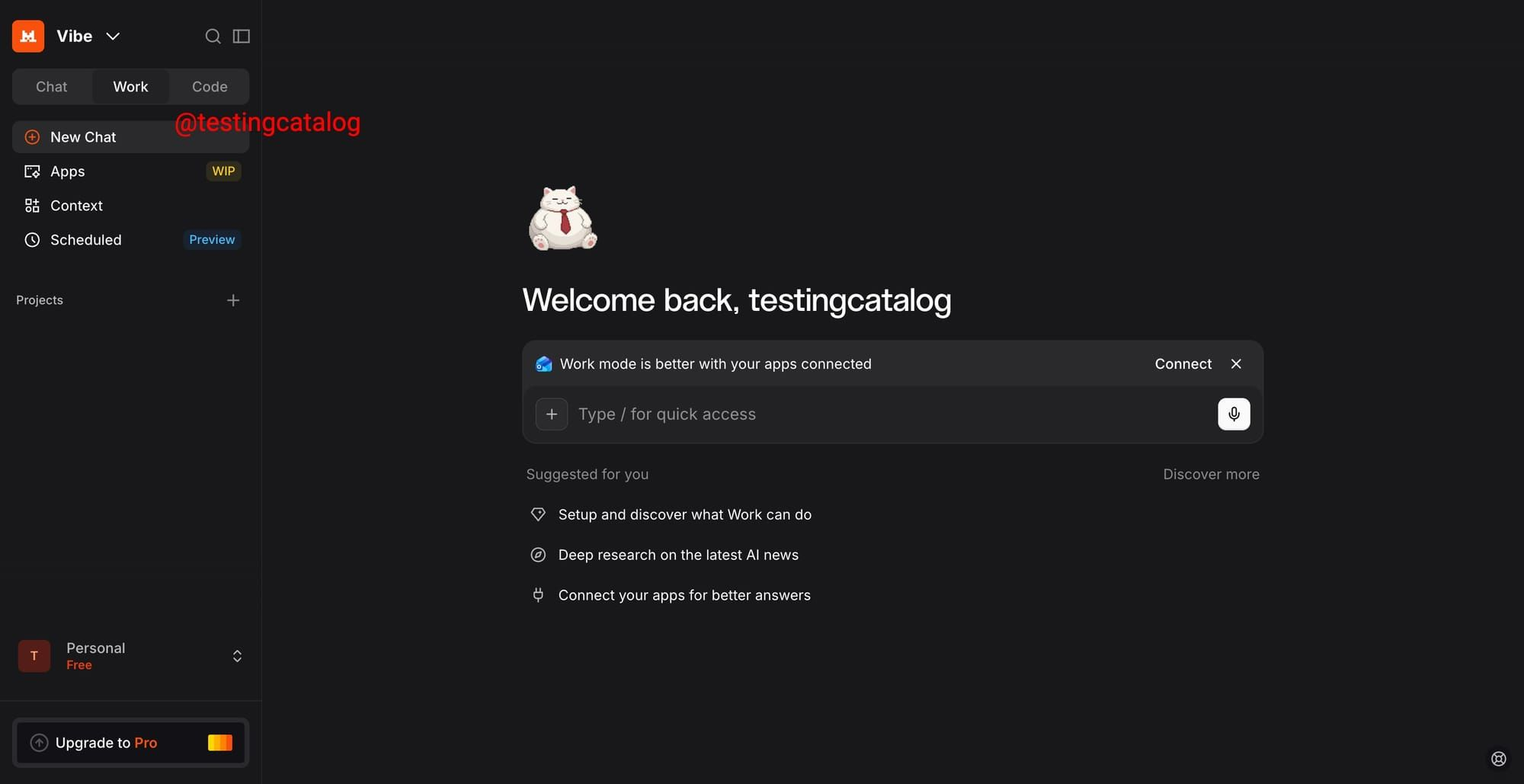
This comes as Mistral prepares a next-generation open-weight model for early access in July. Taken together, the product updates suggest that Mistral is trying to evolve from a model provider into a broader AI productivity platform with coding, workflow, and app-building capabilities.
Microsoft Rolls Out Copilot Cowork Globally for M365
Microsoft has launched Copilot Cowork globally for Microsoft 365 Copilot customers. Cowork is a cloud-hosted agentic system designed to complete long-running, multi-tool tasks across documents, data, and workflows. It is aimed at enterprise users who need agents that can produce finished work, not just suggestions or drafts. Available to Microsoft 365 Copilot subscribers, Cowork handles complex workflows across enterprise documents using top-tier models like Anthropic Opus and GPT 5.5.
Copilot Cowork is now generally available!
— Charles Lamanna (@clamanna) June 16, 2026
Over the last few months of preview in Frontier, we’ve seen you use Cowork to help with so many different tasks. We’ve also been listening closely to your feedback and with GA, we’re bringing you more improvements + new features across… pic.twitter.com/D1hRaK33Lj
To manage the heavy compute required by these autonomous agents, Microsoft has adopted a usage-based billing model denominated in "Copilot Credits" and introduced integrations with third-party tools like Adobe, Miro, and Atlassian.
Microsoft Tests Open Models for Copilot Cowork
Microsoft is reportedly evaluating a broader set of open and open-weight models for Copilot Cowork, beyond just DeepSeek. The key idea is that Cowork may separate the orchestration layer from the model layer, allowing Microsoft to swap models depending on task type, cost, latency, safety, and capability.
This matters because enterprise agents can become expensive when they run long, multi-step workflows. If Microsoft can route simpler tasks to cheaper self-hosted or open models while saving frontier models for more complex work, it could reduce costs and improve flexibility. It also puts pressure on Microsoft’s internal MAI models, which may have to compete not only with frontier labs but also with fast-moving open-model providers.
Google Tests Better Personalization Controls for Gemini
Google is quietly testing new personalization features for Gemini that will prioritize context drawn from a user's paid third-party app subscriptions including support for context from paid subscriptions and potentially third-party apps. This suggests that Gemini may increasingly use external services as part of a user’s context when generating answers.
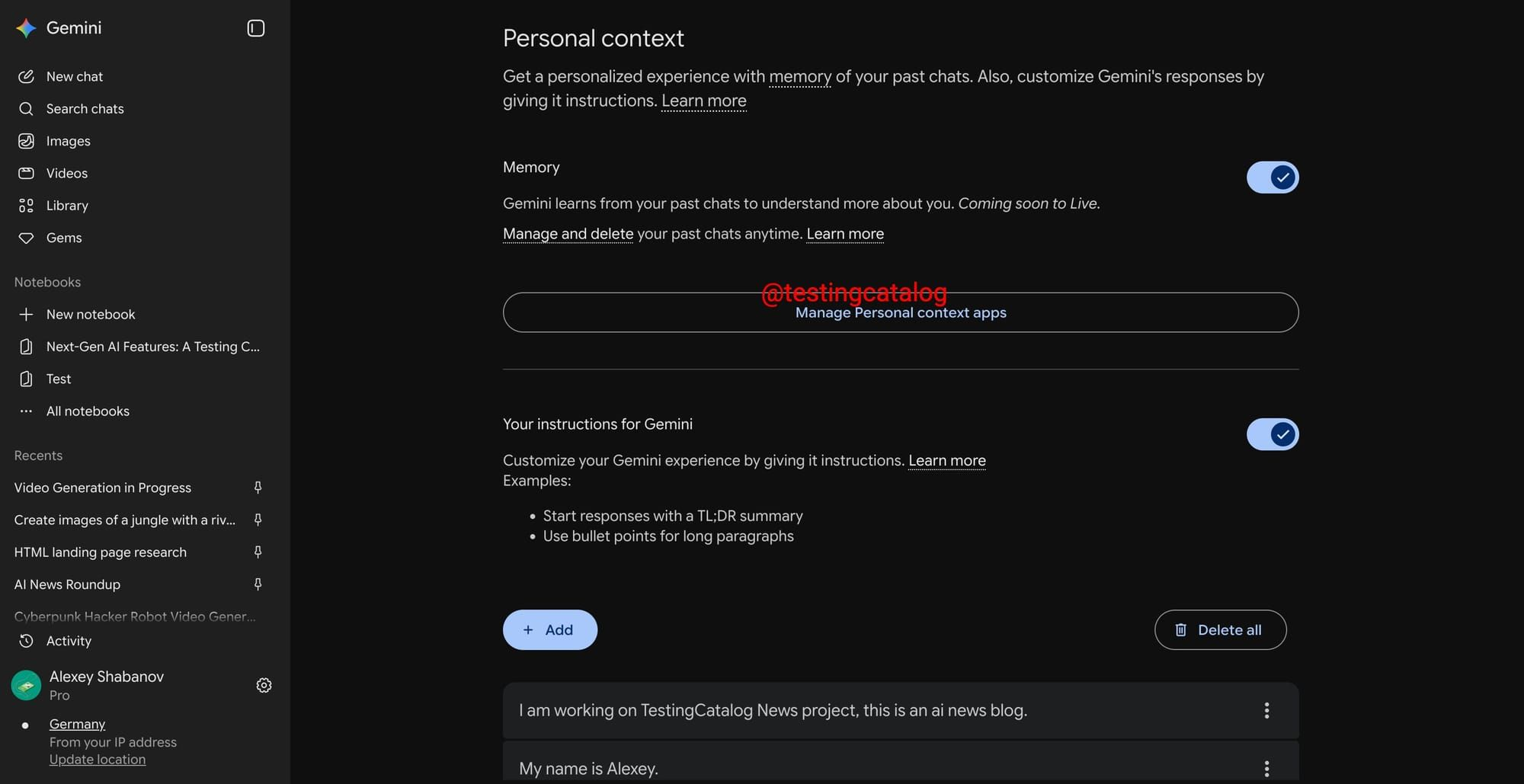
What makes this notable is the control layer. Google appears to be testing ways for users to inspect and manage the context Gemini gathers from connected apps on a per-application basis. This would give users more visibility into what data is being used, which could help reduce concerns around opaque cross-app memory and personalization.
Google works on a 'Skills Marketplace' for Gemini Enterprise
Google is testing a Skills Marketplace inside Gemini Enterprise. The feature appears to include a skills management interface, a Skills Builder, and a marketplace where users can select predefined skills optimized for Gemini and Google services.
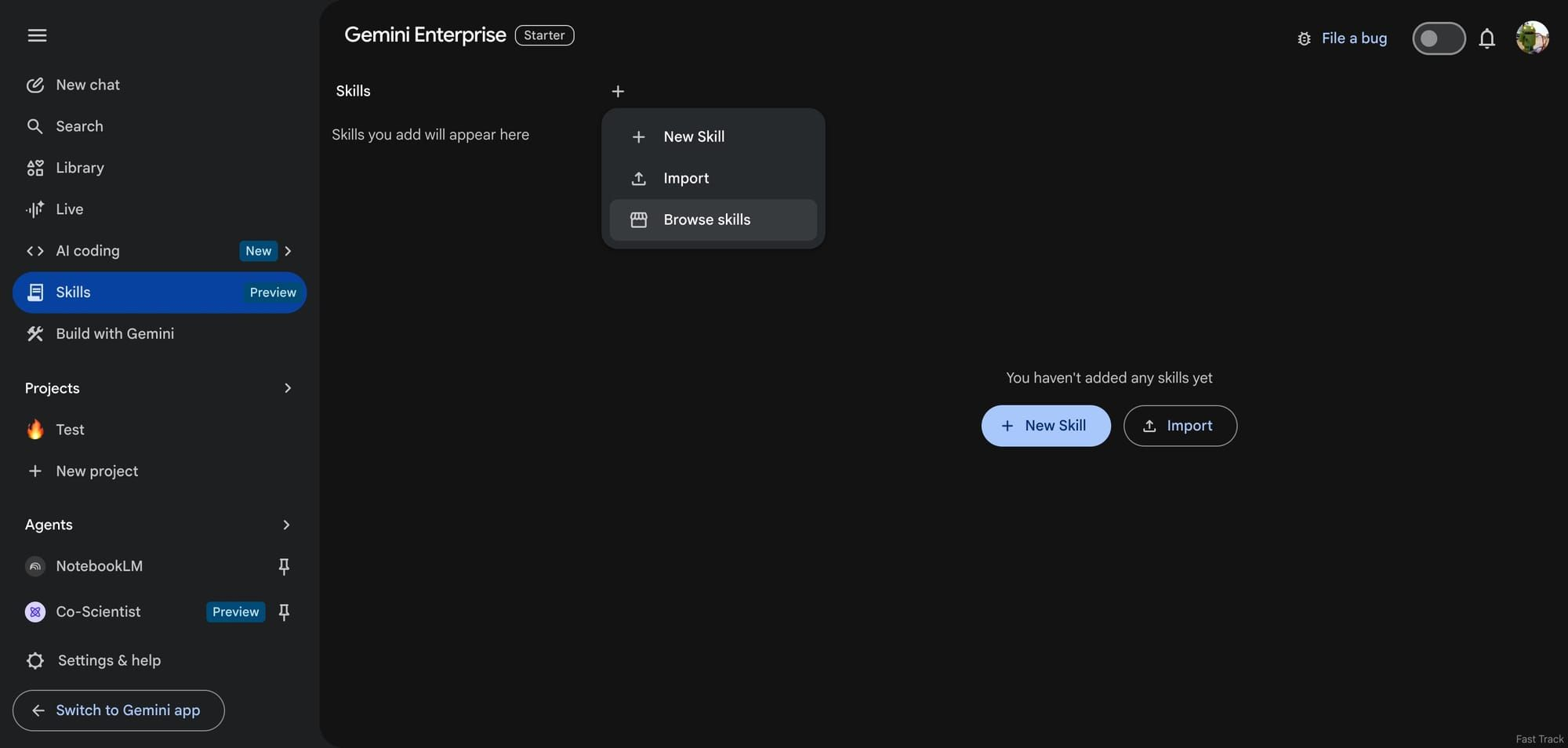
This could turn Gemini Enterprise into a more modular platform where teams can add or build task-specific capabilities without waiting for full engineering development. It also fits Google’s wider push to consolidate separate tools into a unified Gemini surface for enterprise users.
SpaceX Moves to Acquire Cursor in a $60B Stock Deal
SpaceX has reportedly agreed to acquire AI coding startup Cursor in a $60 billion stock deal, shortly after the company’s historic IPO. The acquisition appears to be part of SpaceX’s broader push to strengthen its AI capabilities and expand beyond space infrastructure into AI-powered enterprise and developer tools.
Cursor has grown quickly as AI coding tools become one of the most competitive categories in enterprise software. For SpaceX, the deal could help deepen its AI stack, strengthen its position in developer automation, and support the larger AI infrastructure and enterprise application story it has been presenting to investors. More broadly, the acquisition shows how strategic AI coding platforms have become, especially as companies race to own more of the software development workflow.
Meta Forced to Unwind $2B Manus Acquisition by Beijing
Meta has reportedly begun dismantling its $2 billion acquisition of viral AI startup Manus to comply with a national security divestiture order from the Chinese government. The separation includes halting data sharing and cutting Manus off from Meta’s internal systems.
In response, Manus’s co-founders are reportedly seeking $1 billion in outside funding to buy the company back, establish a Chinese joint venture, and eventually pursue a Hong Kong listing. Despite the regulatory pressure, Manus is reportedly continuing to ship new integrations as its founders work through the corporate split.
Ex-Palantir Founders Raise $60M for ERP-Focused AI Startup
Conduct, a London-based AI startup founded by former Palantir employees, raised $60 million in Series A funding. The round was co-led by Index Ventures and Iconiq, with strategic investment from SAP and participation from existing investors. Conduct focuses on helping enterprises understand and modernize complex legacy ERP systems, especially SAP environments.
The startup’s core argument is that AI agents cannot act effectively on systems they do not understand. Conduct analyzes code and configurations across enterprise systems, then uses AI to make those systems more legible and operable. This is especially relevant for large companies with years of ERP customization, where complexity slows down migrations, maintenance, and AI adoption.
Crusoe Ousted from Wyoming AI Campus Following Google Concerns
Crusoe is reportedly being pushed aside from a major AI data center campus in Wyoming after failing to secure Google as a key customer. Following Google's concerns over the project’s cost and timeline, local energy utility Black Hills Corp. is now bypassing Crusoe to finalize a direct deal with the tech giant for an early 2028 launch. This high-profile ouster amplifies growing industry skepticism regarding Crusoe’s ability to manage large-scale AI infrastructure, especially following previous power failures at its Texas facilities.
Mistral’s CEO Discusses Agentic AI, Chips, and Enterprise Friction
Mistral CEO Arthur Mensch revealed that the French AI startup is exploring the design of its own custom AI chips, a move that could help the company own more of its technology stack and reduce its reliance on external suppliers like Nvidia. Similar to hyperscalers such as Google and Amazon, Mistral appears to be looking beyond model development and toward deeper control of the infrastructure powering its AI products.
Mensch also emphasized that enterprise AI adoption still faces a lot of “viscosity,” or friction, despite the rapid pace of technical progress. Many companies are interested in AI but still struggle to integrate it into real workflows, leaving a large gap for platforms that can make AI more usable in business settings. Combined with Mistral’s push into agentic tools like Vibe, its potential move into custom chips suggests the company wants to compete not just through models, but through a fuller enterprise AI stack spanning infrastructure, agents, and workflow adoption.
CISA Gains Full Access to Anthropic’s Mythos Preview
CISA now reportedly has full access to Anthropic’s Mythos Preview model, but the White House has not yet set clear parameters for how the agency should use it. Mythos Preview appears to be part of a restricted rollout because of its potential cybersecurity power, particularly in vulnerability discovery and analysis.
The model could help defenders identify weaknesses faster by reviewing large volumes of software and system data. However, the same capabilities could also be useful for offensive cyber operations if misused. This makes Mythos Preview an example of a new class of AI models where deployment is not just a product question, but a national security question.
China Pushes Open AI Alternative Amid G7 Restrictions
China is accelerating plans to establish a global AI cooperation organization, positioning its approach as a more inclusive alternative to Western-led AI governance. According to the added summary, Chinese officials are promoting cheaper and downloadable open-model access, especially for the Global South, through forums like BRICS and the Shanghai Cooperation Organization.
This contrasts with the U.S. and G7 direction, where discussions are reportedly moving toward tighter restrictions and trusted-partner access for leading AI models. The update shows a widening divide between open distribution narratives and controlled-access strategies, with AI governance becoming another front in global tech competition.