🤖 The Blockbrain Brief #29

Enterprise AI is getting more practical: agents are learning to work across tools, codebases, and industries while companies race to manage the risks.
📩 High-level Summary
- AI Security & Governance: Anthropic’s Project Glasswing shows that AI can now uncover vulnerabilities at massive scale, while OpenAI’s Frontier Governance Framework gives a clearer public view of how frontier models may be assessed, monitored, and deployed safely.
- Enterprise AI Workspaces: Google, Anthropic, Asana, Glean, and IrisGo are all moving toward AI that works inside real business systems which are shared projects, coding workflows, no-code agents, workplace search, and desktop assistants that learn user routines.
- Agent Control & Security: Geordie AI’s funding highlights a growing need for tools that monitor what AI agents can access, how they behave, and what risks they create as enterprises deploy more autonomous workflows.
- AI Markets: Anthropic’s huge funding round, XCENA’s memory-focused chip bet, and Glean’s cost-saving pitch all point to the same concern: AI adoption is accelerating, but compute, inference, and token costs remain major enterprise bottlenecks.
- Vertical AI Gains Momentum: Mistral’s acquisition of Emmi AI shows how model companies are pushing into specialized industries, with AI systems built for specific use cases like engineering simulations, manufacturing, aerospace, and energy.
An Update on Project Glasswing & Claude's Mythos
Anthropic shared an update on Project Glasswing, its cybersecurity initiative using Claude Mythos Preview to help secure critical software. Anthropic says it and around 50 partners have found more than 10,000 high- or critical-severity vulnerabilities, with some partners increasing bug-finding rates by more than 10x. Cloudflare alone reportedly found 2,000 bugs, including 400 high- or critical-severity issues.
Early results across partners, open-source projects, and security benchmarks show major gains in vulnerability detection. However, Anthropic is warning the industry about a new, emerging risk: because AI accelerates discovery so dramatically, the traditional, slower patching cycles leave systems exposed for longer periods if remediation pipelines don't scale at the same pace.
Inside OpenAI’s Frontier Governance Framework
OpenAI has published its Frontier Governance Framework (FGF), serving as a public playbook for how the company assesses, mitigates, and reports systemic risks from its most advanced models. The framework specifically addresses high-severity risks like cyber offense, CBRN (chemical, biological, radiological, and nuclear) threats, harmful manipulation, and loss of control. It has been designed to align with emerging regulatory standards, including California’s Transparency in Frontier AI Act and the EU AI Act.
The FGF builds on OpenAI’s previous Preparedness Framework. It outlines the lifecycle of a frontier model: how it is tested against capability thresholds, assigned risk tiers, safeguarded, and monitored post-launch. It also details the protocols for halting deployment, protecting model weights, reporting safety findings, and bringing in external experts to ensure the framework evolves alongside AI capabilities.
Google Brings Shared AI Workspaces to Gemini for Business
Google is bridging the gap between its Business and Enterprise tiers by bringing shared project workspaces, collaborative chats, and workflow agents to Gemini for Business. The update allows teams to organize their AI interactions and associated files within a single, unified workspace.
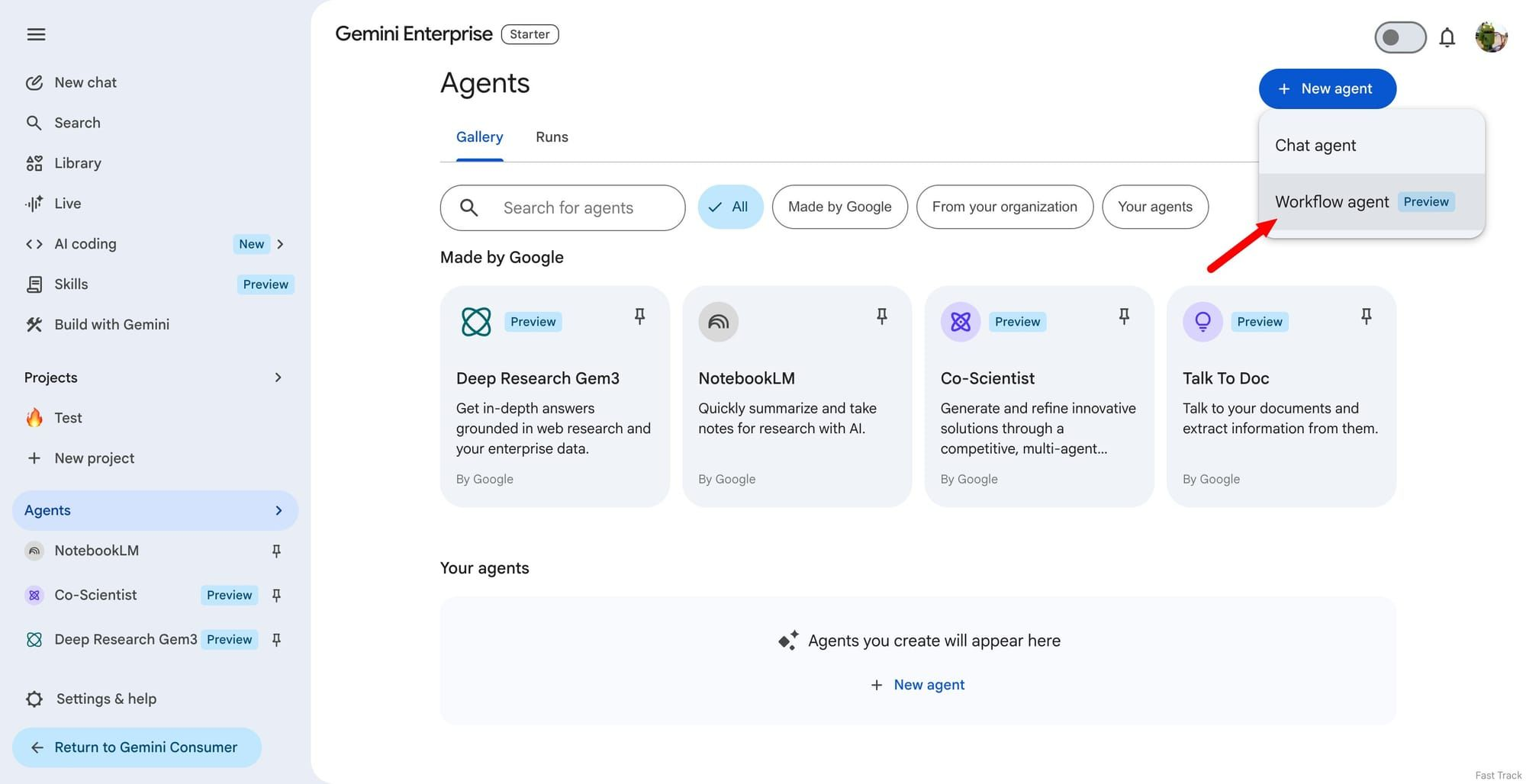
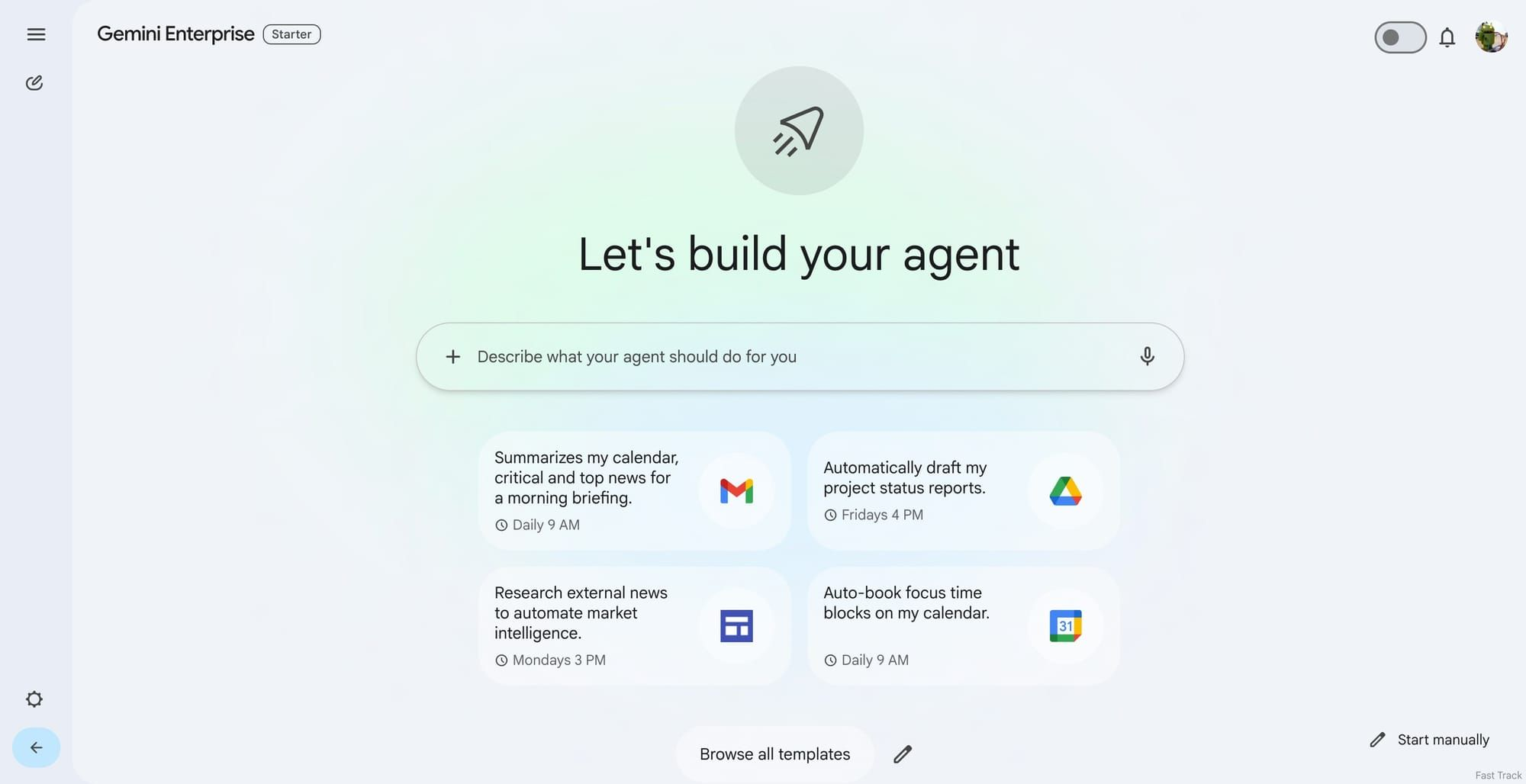
Beyond just chat, teams can apply project-level instructions to ensure the AI maintains specific context, collaborate natively within the same chat thread, and run scheduled automated tasks that span across Google Workspace and third-party tools.
Anthropic Introduces Dynamic Workflows for Claude Code
Targeting engineering teams handling complex, large-scale development, Anthropic is rolling out dynamic workflows for Claude Code. This update allows users to execute massive, multi-step coding projects by deploying parallel agents that can autonomously plan architectures, divide tasks, verify each other's results, and iterate over long-running jobs.
In Claude Code, Opus 4.8 makes calls like an experienced engineer without needing constant check-ins.
— Claude (@claudeai) May 28, 2026
It stays on track across long-running sessions and follows work through in your repo, so you can hand off a feature or a bug sweep while you focus on what's next. pic.twitter.com/9zkNzwPepO
To support these intensive operations, the feature also introduces workflow recovery protocols to ensure progress isn't lost if a process halts and new administrative controls, making it viable for enterprise-grade software migrations and codebase-wide refactoring.
Geordie AI Secures €25M to Govern Enterprise AI Agents
London-based Geordie AI raised a €25 million Series A led by Balderton Capital to expand its AI agent security and governance platform. The company helps enterprises see what agents exist, what they can access, how they behave, and what risks they create. Other reporting described the round as $30 million and highlighted the broader demand for runtime governance as companies deploy more autonomous agents.
There is a growing vertical around AI agent control, with similar players such as Overmind, TrentAI, Nexus, Modern Relay, Logicc, QuoIntelligence, Test of Things, which are other agent supervision/security startups emerging to help companies manage agent behavior, permissions, and risk.
Asana Acquires StackAI to Build an AI-Native Workplace
Asana acquired StackAI, a no-code AI workflow automation startup, for $75 million. StackAI helps users build agents that connect tools like Salesforce, Slack, and Google Workspace, and Asana plans to fold the technology into its AI Studio and AI Teammates products.
The deal supports Asana’s bigger push to become an AI-native workplace platform and not just a task manager, but an operating system for teams where humans and agents manage work together.
Glean Hits $300M Revenue as Enterprises Prioritize AI Cost-Cutting
Enterprise AI search platform Glean has tripled its annualized revenue to $300 million in just 15 months. Despite fierce competition from giants like Microsoft, Google, and Salesforce, the "Google for the workplace" platform is winning enterprise budgets by acting as a highly efficient context graph.
Glean securely connects directly to a company's internal systems, grounding AI responses in precise business context. Crucially, this localized context reduces the overall token usage required from frontier models, making AI budget-cutting one of Glean's most effective selling points.
IrisGo Wants to Be the Desktop Agent That Learns by Watching
IrisGo, a startup backed by Andrew Ng’s AI Fund, Google, and Nvidia, has raised a $2.8 million seed round to build a proactive AI companion for Mac and Windows. Unlike chatbot interfaces, IrisGo lives on the desktop and learns workflows simply by watching the user perform them once.
It is designed for knowledge workers, capable of automating repetitive tasks like drafting emails, processing invoices, generating summaries, and navigating web actions with minimal prompting. The company is currently rolling out beta applications and exploring lucrative pre-install deals with laptop manufacturers.
Anthropic Reaches Near $1T Valuation with $65B Mega-Round
In a move that aggressively positions it against OpenAI ahead of a potential IPO, Anthropic has reportedly raised $65 billion, pushing its valuation to a staggering $965 billion. The mega-round was backed by major financial institutions and infrastructure partners.
This massive injection of capital is earmarked for scaling the Claude model family, expanding pure compute capacity, funding advanced safety research, and securing deep enterprise partnerships. The timing of the raise which is coinciding with the Opus 4.8 and Claude Code updates signals Anthropic's maturation into a dominant enterprise layer.
XCENA Raises $135M on a Bet That Memory is AI's Real Bottleneck
While most of the hardware industry fixates on compute power, XCENA, a US and South Korea-based chip startup, just raised $135 million in Series B funding to tackle a different bottleneck: memory. XCENA is developing memory centric AI chips that process routine data tasks much closer to DRAM.
By handling data near the memory source, their upcoming MX1 chip dramatically reduces the costly and slow round-trips between the CPU/GPU and memory banks during AI inference. If MX1 scales successfully, it could drive a massive reduction in AI infrastructure costs for enterprises running heavy inference workloads.
EQT Selected to Manage €5 Billion Scaleup Europe Deeptech Fund
The European Commission has chosen EQT to manage the new €5 billion Scaleup Europe Fund, a massive financial vehicle designed to back European deeptech startups specializing in AI and quantum computing.
With approximately €2.5 billion already committed by the European Innovation Council (EIC) and private investors, the fund represents a coordinated push by Europe to scale homegrown technological champions and reduce reliance on US-based tech infrastructure.
Mistral Buys Emmi AI to Push Into Industrial AI
Mistral is acquiring Austrian startup Emmi AI, which builds physics-informed “large engineering models” for simulating complex industrial processes. Emmi’s models can simulate things like airflow around aircraft, crash impact in cars, and semiconductor workflows, with applications across aerospace, automotive, energy, and manufacturing.
This marks Mistral's second recent M&A deal following its acquisition of Koyeb, highlighting an aggressive expansion strategy. The Emmi AI acquisition directly strengthens Mistral’s capabilities in specialized, high-stakes industrial AI for the aerospace, automotive, energy, and manufacturing sectors.