🤖 The Blockbrain Brief #28

OpenAI moves deeper into AI security and enterprise deployment, Anthropic targets small businesses, and workflow tools race to turn chat outputs into real business documents.
📩 High-level Summary
- AI Security & Policy: OpenAI launched Daybreak and offered EU institutions access to its cybersecurity tools, positioning Codex Security as part of a broader defensive AI layer. Anthropic, meanwhile, has met with the European Commission but has not yet offered similar access to its models or security tools.
- Enterprise AI Deployment: OpenAI created a new Deployment Company backed by over $4B to help enterprises turn AI pilots into production systems, while Anthropic launched Claude for Small Business to bring practical AI automation to SMBs through integrations like QuickBooks, HubSpot, Canva, and PayPal.
- AI Agents & SMB Automation: CodeWords and Webidoo both raised funding to help businesses automate work across tools, messaging apps, marketing, sales, and operations. The trend is moving toward AI agents that act as an executioner.
- AI Product Experience & Europe: Google’s “Create My Widget” brings prompt-based customization; European AI infrastructure stocks are gaining as investors look for exposure beyond U.S. AI companies
OpenAI Turns Codex Makes Their own Mythos?
OpenAI launched Daybreak, a cybersecurity initiative that uses GPT-5.5 and Codex Security to help organizations detect, validate, prioritize, and patch software vulnerabilities. The goal is to move security earlier into the development process, so companies can find risky attack paths before they become exploitable issues. OpenAI’s Daybreak page describes the system as a way to identify threats, generate patches, and verify remediation across code and systems.
Find and fix vulnerabilities earlier with Daybreak pic.twitter.com/yobOSWYeWP
— OpenAI (@OpenAI) May 11, 2026
OpenAI Gets Ahead in Europe’s Cybersecurity Tool Race
The European Commission welcomed OpenAI’s offer to give European policymakers, institutions, and trusted organizations access to its cybersecurity tools through the OpenAI EU Cyber Action Plan. The plan is framed around strengthening defensive AI capabilities and public safety in line with European priorities. Reuters noted that Anthropic has also met with the Commission several times, but has not yet discussed comparable access to its models or security tools.
OpenAI Launches a $4B Investment to Push AI Into Corporations
OpenAI launched the OpenAI Deployment Company, a new unit designed to help organizations build and deploy AI systems across important business workflows. The unit will embed Forward Deployed Engineers into companies to identify high-impact use cases, redesign workflows, and build production AI systems. OpenAI also agreed to acquire Tomoro, bringing in around 150 deployment engineers and specialists from day one
The company is backed by more than $4 billion in initial investment and supported by a 19-firm partnership led by TPG, with Advent, Bain Capital, and Brookfield as co-lead founding partners. OpenAI says the next stage of enterprise AI will be defined by how effectively businesses deploy AI into real workflows, not just how powerful the models are.
Anthropic Creates Claude For Small Businesses
Anthropic launched Claude for Small Business, targeting smaller companies that need practical automation beyond basic chat. The suite runs through Claude Cowork and includes integrations with tools like QuickBooks, PayPal, HubSpot, Canva, DocuSign, Google Workspace, Microsoft 365, and Slack. It is designed to help small teams with finance, sales, HR, marketing, file management, web browsing, and multistep workflows.
Langdock Redesigns their In-app Document Editor
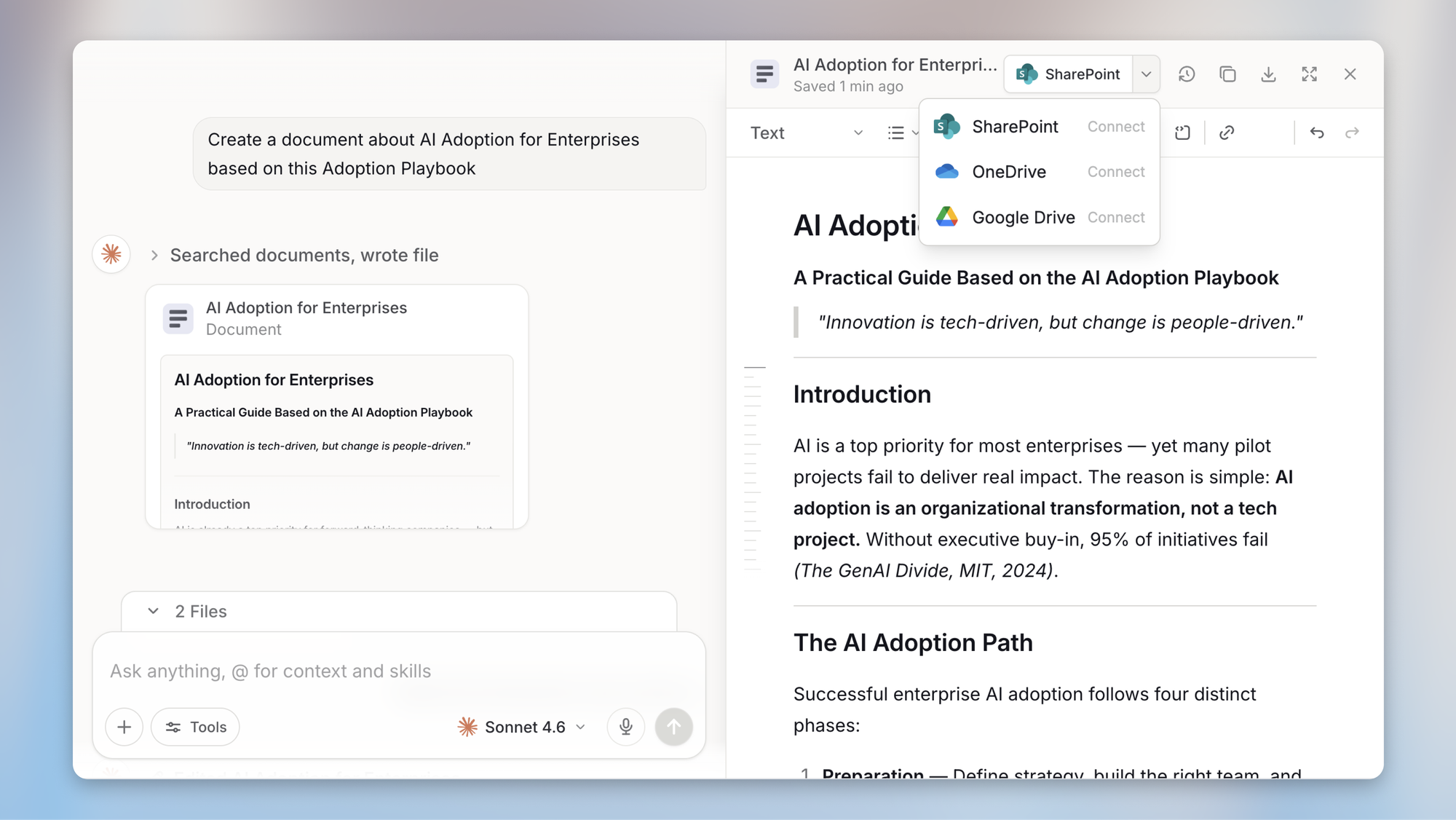
Langdock redesigned its document creation experience, replacing Canvas with a new built-in document editor. Users can now create documents naturally from chat, format them with headings, lists, quotes, code blocks, links, bold, italic, underline, and strikethrough, then save finished documents directly to SharePoint, OneDrive, and Google Drive. Documents also live in the Library, where users can reopen and continue editing them.
CodeWords Raises €7.6M to Make Business Automation Run on Autopilot
London-based CodeWords raised €7.6 million to expand Cody, its AI agent for business automation. Cody learns a company’s tools, goals, and workflows, then suggests and runs automations without requiring code, deployment, or maintenance. The company says Cody already handles around 500,000 tasks per month, including work across integrations and messaging apps like WhatsApp.
Introducing CodeWords UI.
— CodeWords (@CodeWordsAI) February 26, 2026
Thousands of automations run on CodeWords — quietly, in the background, but they were hard to show, share, or sell.
Now you can generate a frontend for any workflow.
• Add a custom domain
• Layer on logins, portals, and subscriptions
• Do this all… pic.twitter.com/jF5TdkmNgL
The startup is part of a broader shift from “build your own automation” tools to agents that can understand business context and proactively execute tasks. Upcoming features include contextual memory, WhatsApp support, and Cody modes, making the agent more personalized and proactive for non-technical teams.
Webidoo Raises €21M to Build an AI Operating Layer for SMBs
Milan-based Webidoo raised €21 million to scale its SMB-focused AI automation platform. The company positions itself as an execution layer that connects fragmented business tools across marketing, sales, and operations, instead of adding another standalone app. Webidoo’s ecosystem includes Jooice, Groow, and Welpy, which help companies adopt AI across core business processes.
The company reported more than €15 million in 2025 revenue and over €2.5 million EBITDA, and plans to use the funding for product expansion and targeted M&A, especially acquiring SaaS companies and marketing agencies that can be strengthened through its AI ecosystem.
Google Lets Android Users “Vibe-Code” Their Own Widgets
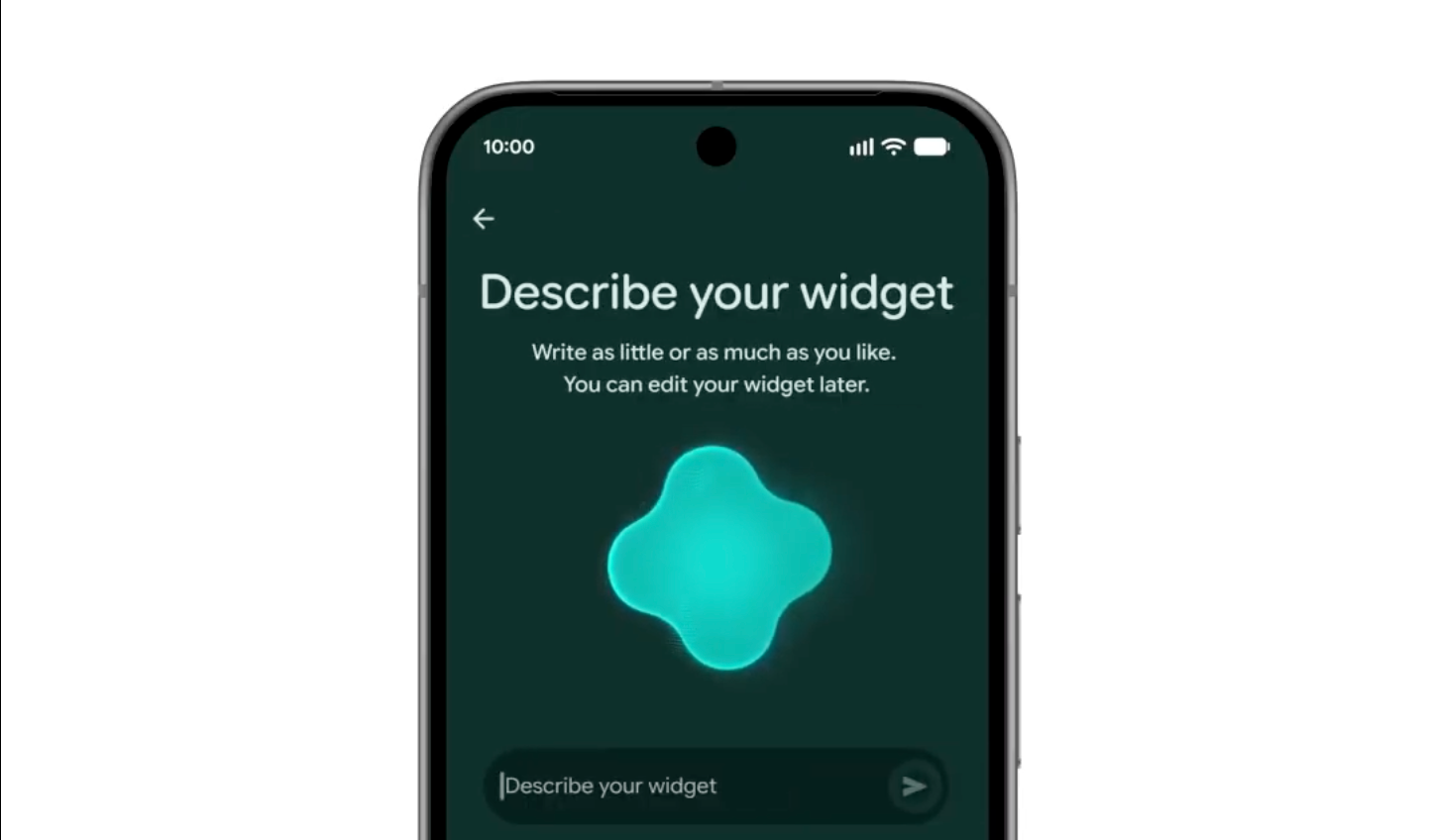
Google unveiled Create My Widget, an Android feature that lets users create custom home screen widgets using natural language. Powered by Gemini Intelligence, users can ask for personalized dashboards such as meal prep ideas, specific weather stats, or travel plans. Gemini can also pull from the web and connect with Google apps like Gmail and Calendar to create more useful, context-aware widgets.
Google says Gemini Intelligence will roll out in waves starting with the latest Samsung Galaxy and Google Pixel phones this summer, with broader availability across Android devices later. The bigger story is that Google is turning Android from a passive operating system into a more proactive “intelligence system.”
Europe’s AI Stocks Are Finally Getting Attention
European AI-related stocks are seeing sharp gains as investors look beyond the U.S. for exposure to the AI boom. The Financial Times reported that companies such as STMicroelectronics, Aixtron, BE Semiconductor Industries, and Nokia have become some of the strongest performers in the Stoxx Europe 600, reflecting demand for Europe’s AI infrastructure players.
The rally is focused less on consumer AI apps and more on the “picks and shovels” layer: chips, semiconductor equipment, wafer technology, data center hardware, energy infrastructure, optical fibres, and electrical components. However, analysts warn that the trade is becoming crowded and expensive, meaning investors may need to be more selective as valuations rise.