🤖 The Blockbrain Brief #27

Anthropic and Google pioneer self-evolving and high-speed agents, SpaceX and SAP invest billions in foundational AI infrastructure, and the EU streamlines regulations as Moonshot AI hits a $20B valuation.
📩 High-level Summary
- Agent Updates: Anthropic’s "dreaming" feature allows Claude to autonomously optimize its memory through reflection, while Google’s Gemma 4 delivers 3x faster inference, marking a transition toward agents that are both self-correcting and real-time.
- Using Workplace Context: Claude’s expansion across the Microsoft ecosystem and Gemini’s multimodal RAG capabilities signal the end of "isolated chatbots," moving instead toward AI that maintains persistent context across spreadsheets, decks, and verifiable source files.
- Acquisitions & Investments: SpaceX’s $119B "Terafab" semiconductor push and SAP’s acquisition of Prior Labs highlight a massive strategic shift: the winners of the next decade will be those who own the hardware and the structured enterprise data it processes.
- Enterprise AI: As the EU streamlines AI regulations to encourage innovation, Anthropic and OpenAI are launching hands-on joint ventures to bypass traditional hurdles and embed AI directly into core corporate workflows.
Anthropic Gives Claude Agents a “Dreaming” Mode
Anthropic introduced a new “dreaming” feature for Claude Managed Agents, currently in research preview. The idea is that agents can improve over time by reviewing previous sessions, identifying recurring mistakes or patterns, and restructuring their memory for better long-term performance. Developers can let these updates happen automatically or manually review them before changes are applied.
In Claude Managed Agents, we’ve added multiagent orchestration, an outcomes loop for rubric-driven self-improvement, dreaming for self-learning, & webhooks. pic.twitter.com/Ip4pgLaEsp
— ClaudeDevs (@ClaudeDevs) May 6, 2026
The update also includes outcomes, where developers can define success criteria for tasks, and multi-agent orchestration, which lets complex work be delegated across specialized agents. This moves Claude closer to enterprise-grade agents that do not just complete tasks, but also learn from operational history and improve through feedback loops.
Claude Integrated Seamlessly Across Excel, PowerPoint, Word, and Outlook
Anthropic has announced that Claude is now generally available within Excel, PowerPoint, and Word, with Outlook currently in public beta. This integration allows Claude to maintain deep context across the entire Microsoft ecosystem. A user can draft a memo in Word, pull data from an Excel sheet, and turn it into a PowerPoint deck all while Claude remembers the specific details of the project across every file.
The primary goal is to eliminate the "re-explaining" phase of AI work. Updates flow across open files, allowing for a cohesive workflow where the AI acts as a central nervous system for office tasks. This move positions Claude as a direct competitor to Microsoft’s own Copilot by offering a sophisticated alternative for paid subscribers.
Hebbia Launches Specialized "Finance Skills"
Hebbia launched Skills, a way for firms to turn institutional knowledge into reusable AI instructions. Each Skill tells the AI how to perform a specific task, including the methodology, formatting rules, judgment calls, and edge cases that usually live inside people’s heads.
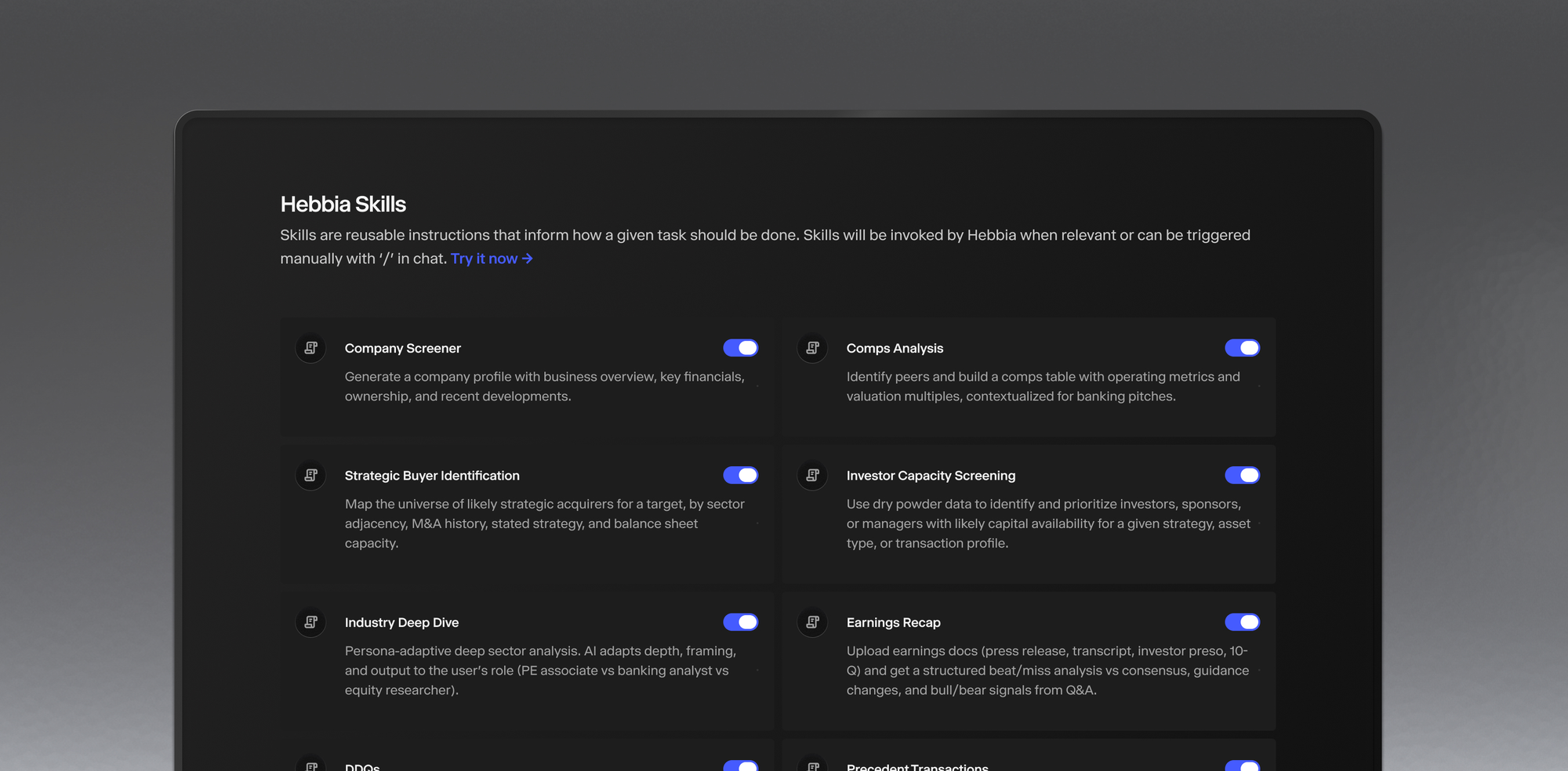
Hebbia frames Skills as a solution to the problem where two people using the same AI model can still get very different outputs. Skills can be built for industries, organizations, or individual preferences, and can include governance controls like editing permissions, sharing rules, and visibility settings.
Google’s Gemma 4 Models Get a 3x Boost with MTP Drafters
Google has introduced "Speculative Decoding" for its Gemma 4 models using Multi-Token Prediction (MTP) Drafters. This technique pairs the high-powered Gemma model with a smaller, faster "drafter" model that predicts several tokens ahead. By verifying these predictions in parallel, the system can deliver LLM responses up to three times faster than previous iterations without sacrificing quality.
Gemma 4: Now up to 3x Faster. ⚡
— Google for Developers (@googledevs) May 5, 2026
Same quality, way more speed. Our new MTP drafters allow Gemma 4 to predict multiple tokens at once, effectively tripling your output speed without compromising intelligence. pic.twitter.com/xyltPFFVMw
This update is particularly vital for real-time applications like chatbots, coding assistants, and on-device agents where latency is a dealbreaker. By reducing the time it takes for an agent to "think" and respond, Google is making high-performance AI more viable for everyday consumer and enterprise hardware.
Gemini API File Search is now Multimodal
Google has significantly upgraded its Gemini API File Search tool to make Retrieval-Augmented Generation (RAG) systems more reliable. The update introduces three key features: multimodal support (searching through images and text simultaneously), custom metadata filtering for better organization, and page-level citations.
We’re expanding the Gemini API File Search tool 🔍 with 3 new updates that enable developers to more easily build multimodal RAG systems with enhanced precision:
— Google AI Developers (@googleaidevs) May 5, 2026
+ Multimodal Support: By leveraging our Gemini Embedding 2 model, File Search can now reason across image and text… pic.twitter.com/jhKbmHLBzD
These updates solve the "black box" problem of RAG by allowing developers to trace an AI’s answer back to the exact page and source material. This makes the outputs of AI agents verifiable and reduces the risk of hallucinations, particularly in data-heavy environments like legal or technical research.
SpaceX Plans $119B "Terafab" Chip Factory
SpaceX is reportedly planning a massive expansion into semiconductor manufacturing with a project nicknamed "Terafab." Starting with a $55 billion investment in Texas that could grow to $119 billion, the facility would produce chips for AI servers, satellites, and advanced computing. This would support not only SpaceX's Starlink constellation but also Tesla’s autonomous driving and robotics efforts.
If successful, this move would make Elon Musk’s ecosystem less dependent on third-party chipmakers like Nvidia. It signals a future where AI compute is integrated directly into the infrastructure of space travel, global internet, and autonomous transport.
SAP Acquiring German AI Company Prior Labs to Dominate Enterprise Data
Enterprise giant SAP has announced plans to acquire the German AI startup Prior Labs for $1.16 billion. Over the next four years, SAP intends to invest €1 billion into a new AI lab focused specifically on "structured" enterprise data such as tables and databases that run global business. Prior Labs is known for its ability to handle complex business logic, making it a perfect fit for SAP’s push into agentic AI.
SAP wants to ensure that as businesses move toward "agentic" workflows (where AI does the work), those agents are built directly on top of SAP’s software ecosystem, rather than a third-party platform.
EU Simplifies AI Act for Business Innovation
The EU has reached a political agreement to simplify the rules within the AI Act, aiming to make it easier for businesses to comply while maintaining strict safety standards. The new timeline sets clear milestones for "high-risk" AI systems starting in 2027. Additionally, the agreement explicitly bans harmful applications, such as "nudification" apps and non-consensual content creation, to protect citizens.
The goal is to foster an environment where European AI companies can compete globally without being buried in red tape, while still leading the world in ethical AI regulation.
Moonshot AI Raises $2B as Open-Weight AI Demand Grows
Moonshot AI, a Beijing-based lab, has raised $2 billion at a staggering $20 billion valuation. Moonshot is the team behind the "Kimi" models, which are popular for their open-weight architecture and massive context windows. This funding highlights the massive demand for open-source AI, especially in markets where users prioritize lower-cost inference over the high prices of proprietary models like GPT-4.
Anthropic and OpenAI Launch Joint Ventures
Anthropic and OpenAI are launching joint ventures backed by major venture capital firms. Anthropic’s venture includes Blackstone, Hellman & Friedman, and Goldman Sachs as founding partners, while OpenAI is reportedly raising funds for a larger venture called The Development Company. These ventures will create dedicated engineering teams that work directly with portfolio companies to integrate AI into their existing workflows. This moves the AI giants from being "software providers" to being "implementation partners."