🤖 The Blockbrain Brief #26

Google and OpenAI debut unified agent platforms, Cohere and Aleph Alpha form a $20B sovereign alliance, and Anthropic scales European infrastructure amidst a model security probe.
📩 High-level Summary
- Enterprise Agent Platforms: Google expanded Gemini Enterprise into a full agent platform, while OpenAI introduced shared workspace agents in ChatGPT, signaling that AI assistants are becoming governed systems for team-wide workflows.
- Using Workplace Context: Google’s Workspace Intelligence shows the shift from simple chatbots to AI agents that understand emails, files, projects, collaborators, and company context across the work environment.
- AI in Europe: Cohere’s reported Aleph Alpha deal and xAI’s explored Mistral partnership show rising demand for regional EU AI players, stronger data control, and alternatives to relying fully on US Big Tech.
- Infrastructure and Security: Anthropic’s Mythos investigation and European data center hiring push show that AI competition now depends not only on model capability, but also on compute access, data residency, security controls, and vendor governance.
Google launches new Platform for Enterprise-Grade AI Agents
Google has significantly expanded its Gemini ecosystem by launching a specialized platform designed specifically for Gemini Enterprise. This system serves as a holistic "single pane of glass" that allows large organizations to build, deploy, and govern AI agents at scale.
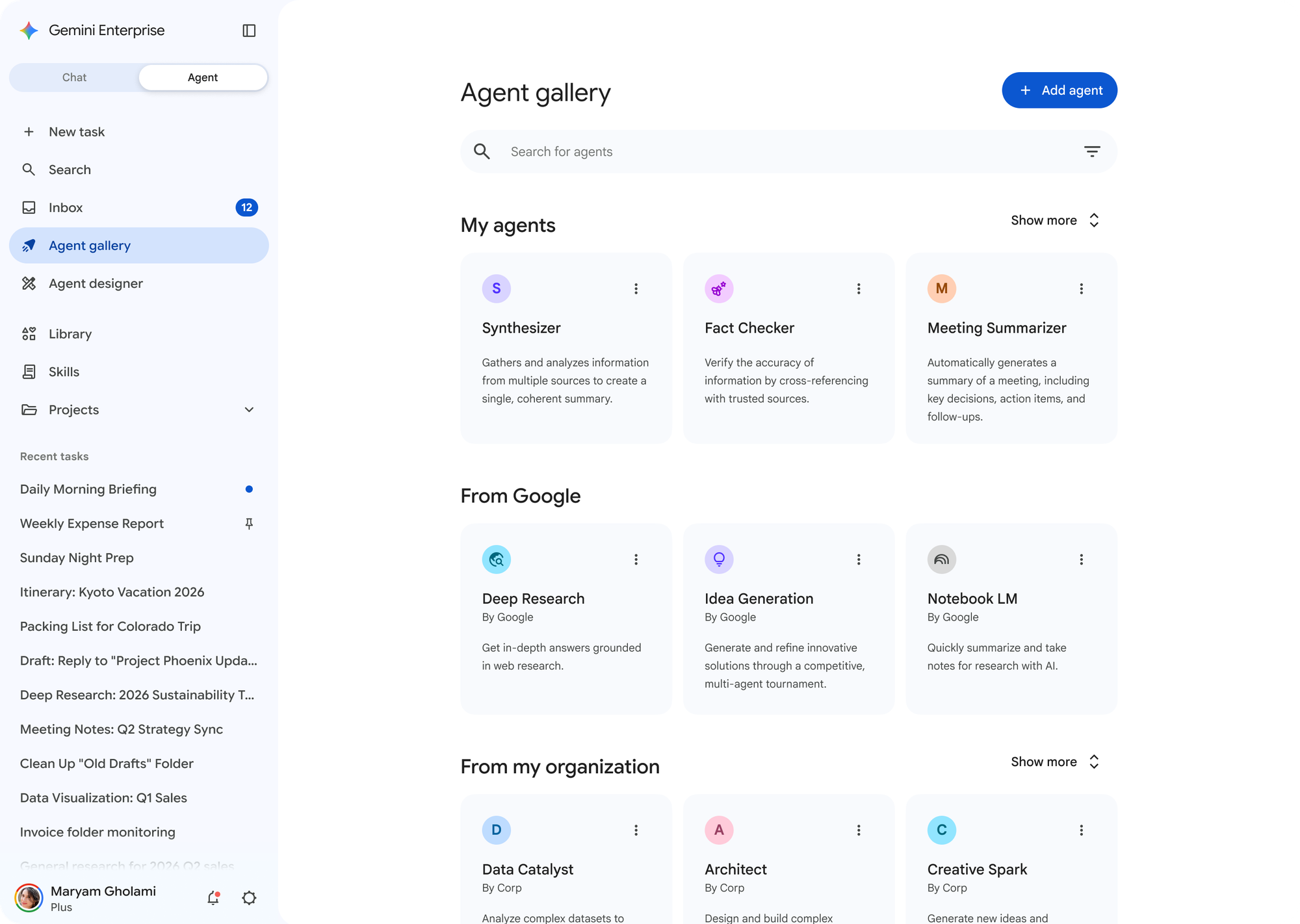
Beyond just creating bots, the platform emphasizes governance and administrative controls, ensuring that AI agents operating within a corporate environment adhere to security protocols and organizational standards. By centralizing the management of agent workflows, Google is positioning Gemini as the backbone for automated enterprise operations.
Google introduced Workspace Intelligence for Gemini Workspace
Google introduced Workspace Intelligence, a new semantic layer for Google Workspace that connects emails, chats, files, collaborators, projects, and user behavior into shared context for Gemini-powered agents. The goal is to help Gemini understand not just isolated documents, but the full work environment around a user’s task.
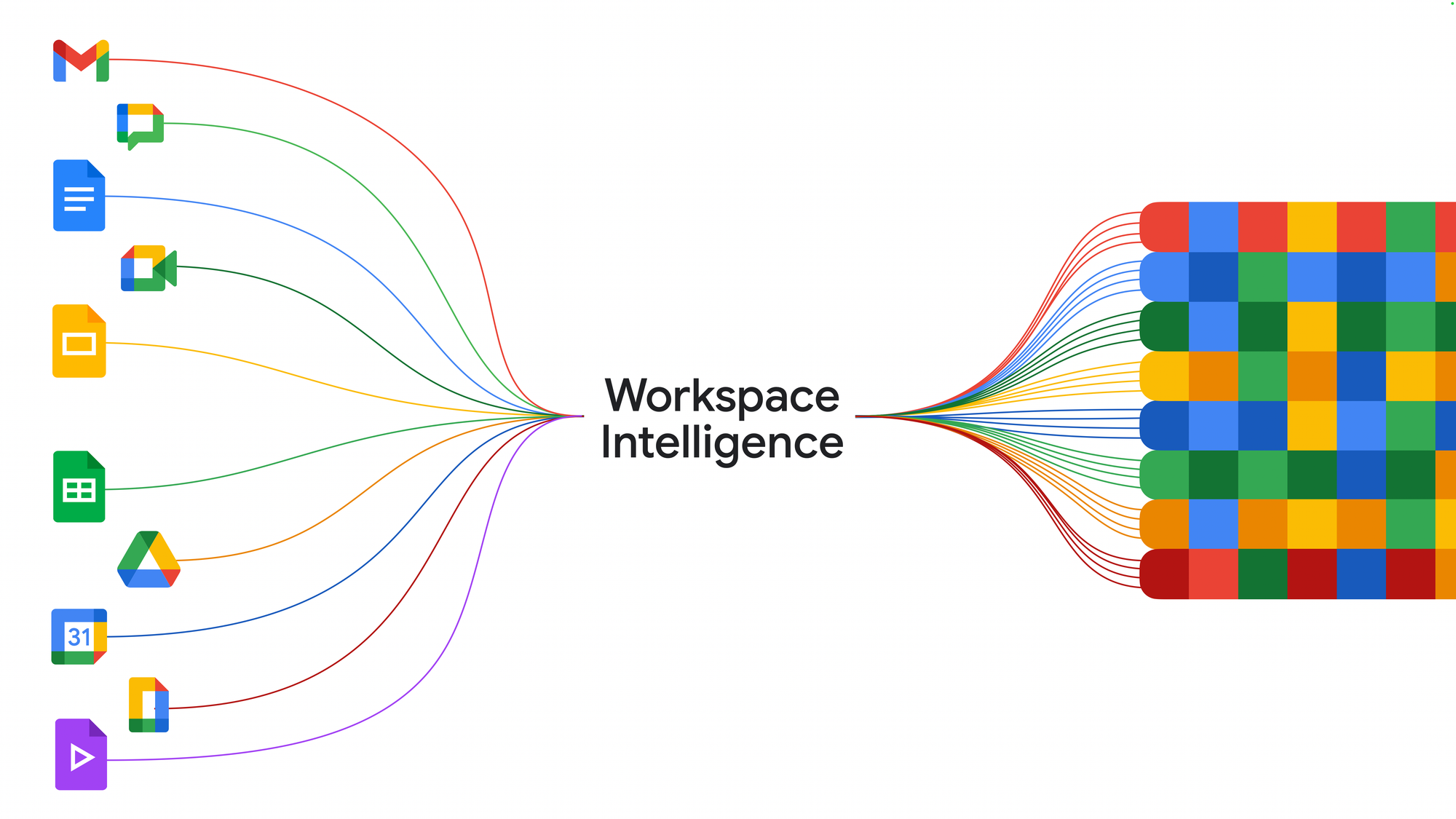
Google is also extending this into Docs, Sheets, Slides, Gmail, Drive, and Chat, with features like AI Inbox, AI Overviews in search, natural-language spreadsheet creation, editable deck generation, Drive Projects, and a Workspace MCP Server for outside AI apps and agents. Security and admin controls are central to the pitch, especially because the system reasons across sensitive company data.
OpenAI Launches Shared Workspace Agents in ChatGPT
OpenAI introduced workspace agents in ChatGPT, letting teams create shared Codex-powered agents that can handle complex tasks, long-running workflows, and multi-step work inside an organization’s permissions and controls. These agents can run in the cloud, continue working even when users are away, interact through ChatGPT or Slack, use connected apps, remember context, and follow team processes.
Introducing workspace agents in ChatGPT—shared agents that can handle complex tasks and long-running workflows across tools and teams. pic.twitter.com/eHplfXCWlk
— OpenAI (@OpenAI) April 22, 2026
OpenAI’s examples include software review agents, product feedback routers, weekly metrics reporters, lead outreach agents, and third-party risk managers. The broader message is that ChatGPT is moving from individual productivity into repeatable team workflows.
V7 Pushes AI Slide Generation Into Enterprise Workflows
V7 has launched a new AI-powered slide generation tool that aims to eliminate the generic, "bad AI" aesthetic common in automated presentations. The platform focuses on high-fidelity design and professional layouts that mirror the quality of a human graphic designer rather than a template-filler.
Cohere and Aleph Alpha Form a $20B Sovereign AI Player
Cohere is reportedly taking over Germany’s Aleph Alpha in a deal valuing the combined group at around $20 billion, creating a Canada-Germany AI player focused on sovereign AI for governments and enterprises. The combined company will keep the Cohere name and operate with dual headquarters in Canada and Germany, while Schwarz Digits is set to invest $600 million across equity and research funding. The deal reflects growing demand from governments and enterprises that want more control over AI infrastructure, data, and deployment, rather than relying heavily on US giants like OpenAI and Google.
xAI Reportedly Explored a Mistral and Cursor Partnership
Elon Musk’s xAI is reportedly in talks to form strategic partnerships with European AI leader Mistral and the AI-powered code editor Cursor. The goal of these discussions is to boost xAI’s underlying model performance and significantly enhance its specialized coding capabilities. By aligning with Mistral, xAI gains a stronger foothold in the European market and access to high-efficiency models, while a deal with Cursor would provide a direct pipeline into the developer ecosystem, allowing Musk to better compete with the coding prowess of OpenAI’s GPT-4 and Anthropic’s Claude.
Anthropic Investigates Possible Mythos Breach
Anthropic is currently investigating a potential security incident involving its Mythos AI model following reports that unauthorized users gained access to the tool. While details remain limited, the investigation was prompted by reports of a small group of users bypassing standard access protocols. This incident highlights the ongoing security challenges faced by leading AI labs as their internal tools and models become high-value targets for hackers and unauthorized testers looking to exploit proprietary technology.
Anthropic Moves to Secure European Data Center Capacity
Anthropic is looking to secure European data center capacity to power its frontier AI models, with a new London-based role focused on sourcing deals and negotiating compute agreements across hubs like Frankfurt, London, Amsterdam, Paris, Dublin, the Nordics, and Southern Europe. The push follows major U.S. infrastructure moves, including a $100B AWS commitment and a Broadcom deal covering around 3.5 gigawatts of compute capacity. It also reflects a broader race among AI companies to lock in energy, regional infrastructure, and data center access as model demand scales.