🤖 The Blockbrain Brief #24
Anthropic turns agent infrastructure into a product, Gemini evolves into a more persistent and visual workspace, and the AI industry faces fresh questions around security, scale, and enterprise control.
📩 High-level Summary
- Anthropic’s Production Agents: Claude Managed Agents debuted in beta, while a new 'Advisor' tool on the Claude platform optimizes high-reasoning tasks for cost efficiency.
- Harvey's Collaborative Cloud: Introduced 'Spectre' to enable secure, sandboxed execution of cloud agents with durable workflows for global team collaboration across systems.
- Gemini's Knowledge Context: Rolled out 'Notebooks' to manage multi-document context and interactive 3D visualizations for real-time visual learning and exploration within chat.
- Glean's Content Generation: New platform updates include full Slide and interactive Page generation using company templates, plus direct image editing capabilities to streamline in-app creative workflows.
- AI Merger: Canadian leader Cohere and Germany’s Aleph Alpha are in merger talks with Berlin's backing, positioning themselves as a private-enterprise alternative to Silicon Valley for data-sensitive Western markets.
- Massive Infrastructure Scaling: Anthropic secured multi-gigawatt TPU capacity through Google and Broadcom for 2027, alongside a deepened Google-Intel partnership to co-develop high-performance AI processors for Google Cloud.
Anthropic launches Claude Managed Agents
Anthropic launched Claude Managed Agents in public beta, positioning it as a fully managed agent harness for teams that want cloud-hosted agents without building their own sandboxing, orchestration, and state management layer. The platform includes secure sandboxing, built-in tools, streaming, checkpointing, permissions, long-running sessions, and session tracing, with Anthropic pitching it as a way to move from prototype to launch much faster. Early adopters mentioned include Notion, Rakuten, Asana, Vibecode, and Sentry. This is a shift to selling agent infrastructure as a managed service.
Introducing Claude Managed Agents: everything you need to build and deploy agents at scale.
— Claude (@claudeai) April 8, 2026
It pairs an agent harness tuned for performance with production infrastructure, so you can go from prototype to launch in days.
Now in public beta on the Claude Platform. pic.twitter.com/vHYfiC1G56
Anthropic’s advisor tool makes “smart when needed” a product feature
Anthropic also launched the advisor tool in public beta. It lets developers pair a cheaper executor model like Sonnet or Haiku with a higher-intelligence advisor model that steps in only when more strategic reasoning is needed. The advisor model intervenes only when high-level reasoning is required, while the executors handle the routine data processing.
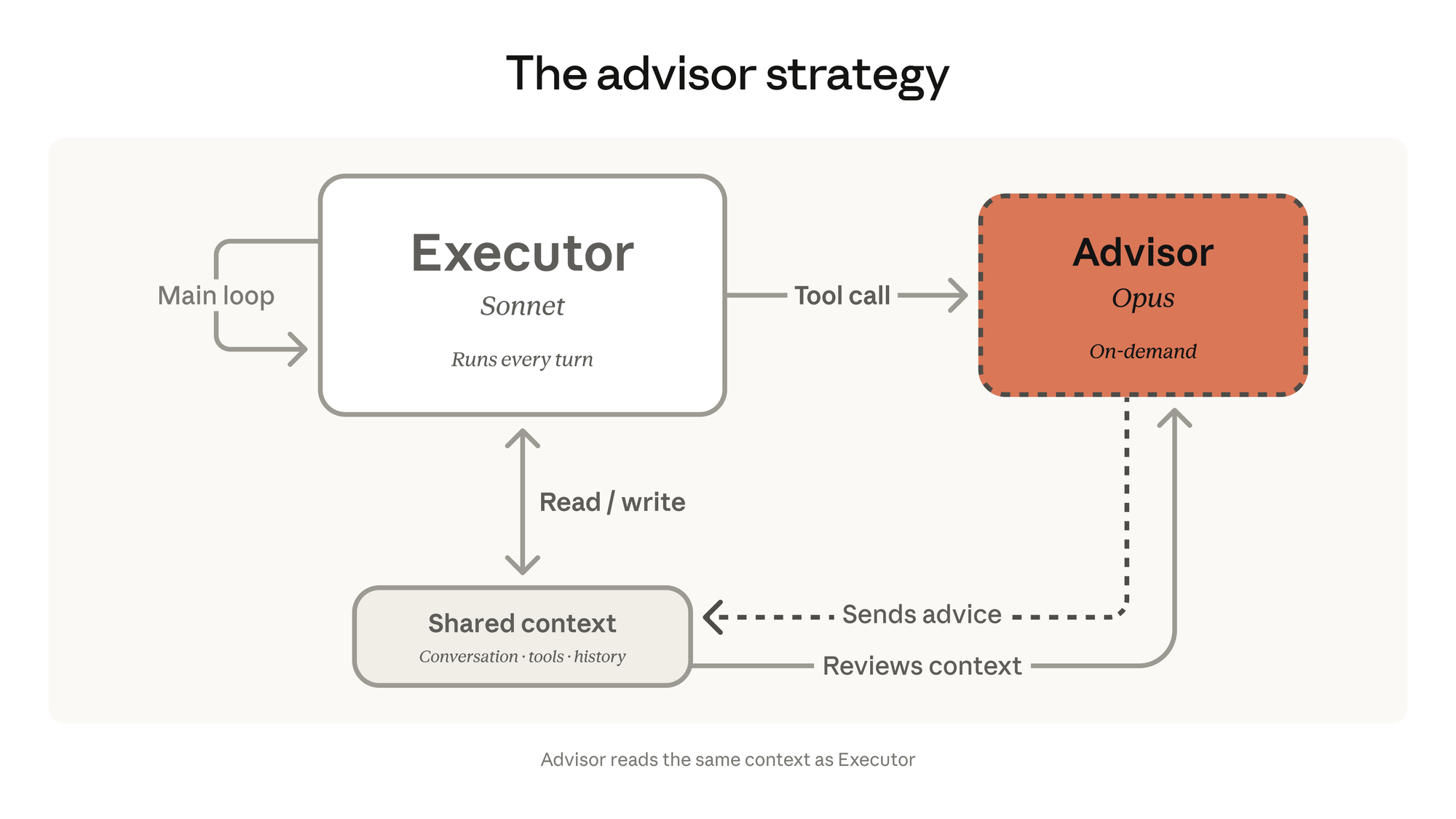
This is a major win for cost-efficiency. By using a "Messages API" configuration, developers can significantly lower the token costs of complex agents without sacrificing the quality of the final output. It essentially creates a hierarchy of AI labor within a single application.
Hebbia upgrades Projects into a stronger collaboration layer
Hebbia has upgraded its "Projects" feature to include a more collaborative and automated experience. The standout feature is "The Intern", an analyst agent that lives directly in a user's inbox, ready to process data and answer questions.
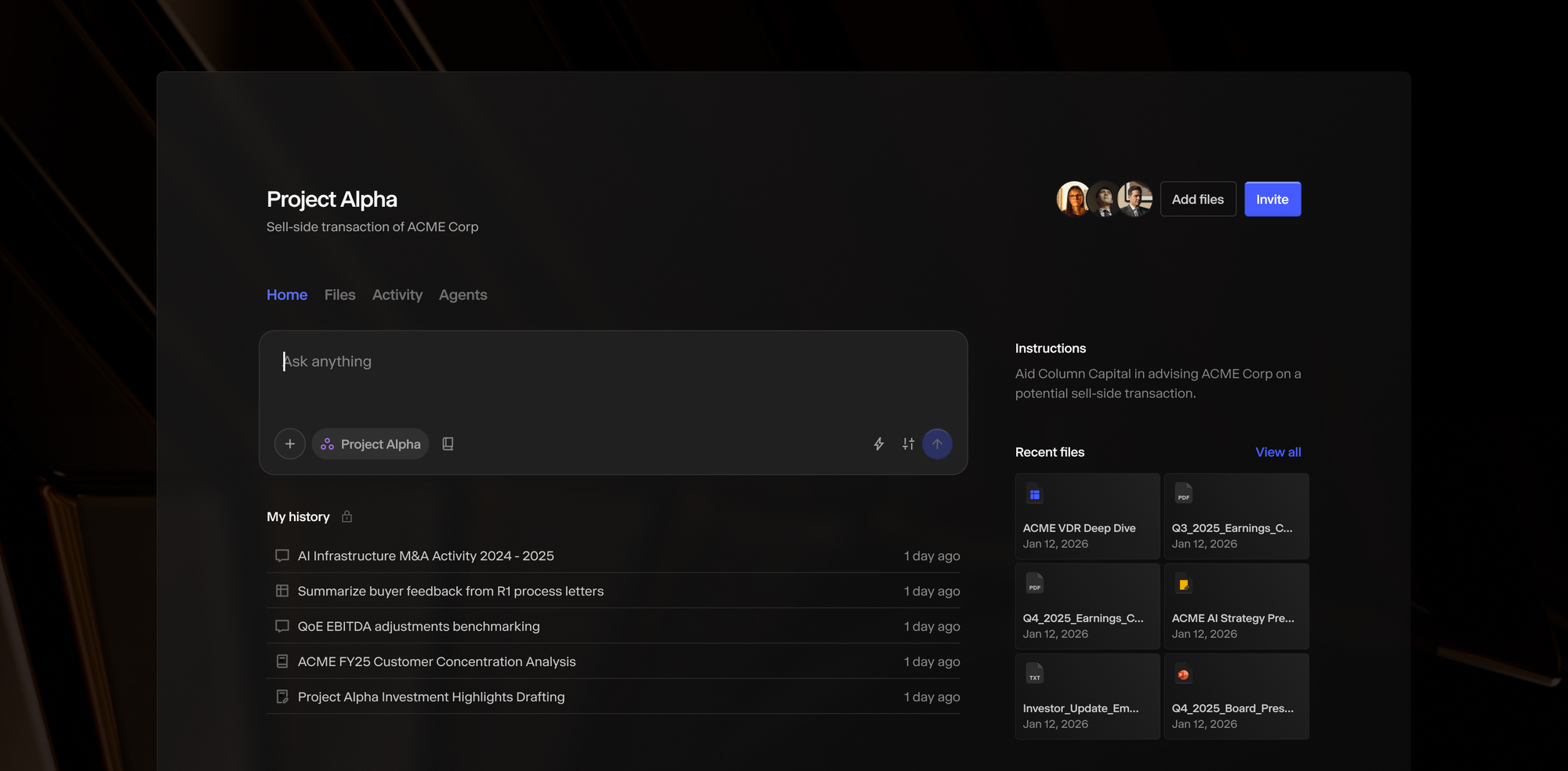
Additionally, users can now "fork" published chat snapshots, allowing different team members to take a conversation in new directions without affecting the original.
Glean’s New Features: Static Documents to Dynamic Dashboards
Glean has rolled out a massive update focused on content creation. Key features include "Slide Generation," where the AI uses company templates to draft presentations, and "Interactive Page Generation," which turns raw documents into dynamic canvases including dashboards, diagrams, and infographics.
New in Glean Assistant: slide and interactive page generation
— Glean (@glean) April 8, 2026
→ Slide generation: Assistant uses your company template to structure slides, draft content, and generate visuals, while you refine the story and add context via chat.
→ Editing capabilities: Images are fully… pic.twitter.com/Lk8ctphA1P
Glean is also introducing direct image editing within its platform. Users can simply highlight an area of an AI-generated image, describe the desired change, and the AI applies it instantly. This streamlines the creative workflow by keeping everything within a single ecosystem.
Harvey’s Spectre shows what cloud agents look like when built for teams
Harvey, the legal-AI powerhouse, has introduced "Spectre," an internal platform that moves AI agents from individual laptops to a secure, shared cloud environment. Spectre allows agents to run in isolated sandboxes and collaborate via "durable workflows." This means that if an agent is working on a long-term project, its progress is saved and can be reviewed or resumed by any team member. The "sandboxing" feature ensures that AI agents can execute code or access data without risking the broader corporate network.
Gemini gets Notebooks, making project context more persistent
Google introduced Notebooks in Gemini, giving users a dedicated place to organize topic-specific chats and files. Users can move past chats into notebooks, add custom instructions, upload documents and PDFs, and then let Gemini use those sources alongside its tools and web search. The notebooks also sync with NotebookLM, so sources added in one place appear in the other.
Project organization is here: Introducing notebooks in Gemini.
— Google Gemini (@GeminiApp) April 8, 2026
You can now keep multiple projects organized and even add past chats and relevant files as sources, so you have a dedicated space to focus on the task at hand.
Select “New notebook” in the side panel to get started.
This makes Gemini feel less like a sequence of disconnected chats and more like a project workspace. The NotebookLM sync connects Gemini’s conversational interface with a more document and source-centered environment, which is useful for longer-running knowledge work.
Gemini adds interactive visualizations inside chat
Google also rolled out the ability for Gemini to generate interactive visualizations directly in chat. Gemini can turn questions and complex topics into custom interactive visualizations, and outside coverage shows these include manipulable 3D models and simulations with adjustable variables, rotating views, and real-time exploration.
Gemini can now transform your questions and complex concepts into customizable interactive visualizations directly in your chat.
— Google Gemini (@GeminiApp) April 9, 2026
Adjust variables, rotate 3D models, and explore data for a more immersive way to learn and explore in Gemini.
Meta Pauses Work with Mercor Following Data Breach
Meta paused work with Mercor after a major security breach, and that other major AI labs were reevaluating their work with the data vendor. Mercor helps OpenAI, Anthropic, and others build proprietary training datasets using large contractor networks, which makes it a sensitive part of the AI supply chain. WIRED says the breach appears linked to compromised LiteLLM updates, with TeamPCP identified as the likely attacker behind the broader supply-chain incident.
The Mythos Strategy: Why Anthropic is Gating its Latest Tech
There is growing speculation that Anthropic is limiting the release of its "Mythos" technology to large enterprises only. While the official reason may be "safety" and protecting the internet from AI-generated spam, critics suggest it's a strategic move to lock in high-value enterprise deals and prevent smaller competitors from "distilling" (copying) their tech.
Anthropic Partners with Google & Broadcom
Anthropic announced a new agreement with Google and Broadcom for multiple gigawatts of next-generation TPU capacity expected to come online starting in 2027. The company says this is its largest compute commitment so far and is meant to support frontier Claude models and surging demand. Anthropic also said its run-rate revenue has surpassed $30 billion, up from about $9 billion at the end of 2025, and that the number of business customers spending over $1 million annually more than doubled in under two months.
Google and Intel Expand Partnership
Google and Intel expanded their partnership around AI-focused CPUs and custom infrastructure processors. Google will keep deploying Intel Xeon chips, including Xeon 6, for inference and general-purpose computing, while the two companies deepen co-development of IPUs that offload some traditional CPU tasks. Reuters notes that as AI shifts from training toward deployment and agentic workloads, demand for traditional compute has risen again.
As systems become more agentic and production-oriented, the stack needs balanced compute across CPUs, networking, storage, and specialized infrastructure. The deployment era may reward companies that can optimize the full system, not just model training.