🤖 The Blockbrain Brief #22

Perplexity launches Comet Enterprise for governed AI browsing, OpenAI deepens its push into agentic coding with Astral and new Codex updates, and Mistral sharpens its enterprise strategy with Forge and its “build-your-own AI” pitch.
📩 High-level Summary
- Mistral’s Sovereign AI: Mistral launched Forge, allowing enterprises to train custom models from scratch on their own internal systems to ensure data independence and precision.
- Perplexity’s Secure Search: The new Comet Enterprise managed browser introduces administrative controls and data compliance, moving AI search into a governed corporate perimeter.
- OpenAI’s Developer Ecosystem: OpenAI is acquiring Astral to integrate high-performance Python tools into Codex, while introducing subagents to allow for parallelized, complex workflows.
- Agentic Safety & Building: OpenAI shared its GPT-5.4 monitoring framework for agent alignment, while Dust.tt launched Sidekick to help non-technical users build agents using natural language.
- Enterprise Versatility: Glean now allows users to choose their preferred LLM per query, and Germany announced plans to double its AI data center capacity by 2030 to support local compute needs.
- Productivity Breakthroughs: Lovable expanded into a full agentic workspace with "Workspace Knowledge," while V7 Go introduced instant, formula-linked spreadsheet generation.
Perplexity launches Comet Enterprise as an AI browser for work
Perplexity has launched Comet Enterprise, positioning the browser itself as the primary workspace for AI-assisted knowledge work. Instead of asking users to jump into a separate chatbot window, Comet brings contextual page analysis, browser commands, email and calendar actions, and multi-step web task execution directly into a Chromium-based browser environment. The enterprise edition is designed for company rollouts, with centralized deployment across Windows and macOS, extensive policy support, admin controls, domain restrictions, approval requirements, telemetry, and audit logging.
Today we're launching Comet Enterprise.
— Perplexity (@perplexity_ai) March 17, 2026
Now, the most powerful AI browser is available to enterprise teams. Research, automate tasks, and get work done without leaving the browser. pic.twitter.com/X8n78W3mI7
Perplexity is treating the browser as a managed enterprise endpoint. It positions itself as compliant including SOC 2 Type II, GDPR, and HIPAA-related language, while an added CrowdStrike layer points to a future where AI browsers are sold as secure, governable workplace infrastructure.
Mistral AI Challenges the Giants with "Forge" for Custom Model Building
Mistral AI is doubling down on the "build-your-own" philosophy with the launch of Enterprise AI Forge. Unlike many competitors that rely heavily on Retrieval-Augmented Generation (RAG) or simple fine-tuning, Forge allows organizations to train models from the ground up on their own internal systems, workflows, and proprietary data.
Today, we’re introducing Forge, a system for enterprises to build frontier-grade AI models grounded in their proprietary knowledge.
— Mistral AI (@MistralAI) March 17, 2026
🌎 Forge bridges the gap between generic AI and enterprise-specific needs. Instead of relying on broad, public data, organizations can train models… pic.twitter.com/4YQ3ADvixr
This strategy emphasizes independence from third-party providers and offers deep customization. By enabling companies to train models on-premise or within their own cloud environments, Mistral is positioning itself as the primary choice for "sovereign AI" in Europe and beyond, specifically targeting regulated industries that cannot risk data leakage to US-based providers.
Cohere and NVIDIA Partner for Secure, Sovereign AI Deployments
Cohere has announced a strategic partnership with NVIDIA to accelerate the deployment of sovereign AI for governments and highly regulated sectors. The collaboration focuses on making Cohere’s models optimized for NVIDIA infrastructure, specifically through the DGX Spark platform. This allows organizations to run secure, low-latency AI workloads on-premise or within national borders, catering to the "sovereign AI" movement.
This partnership bridges the gap between high-performance hardware and secure software. By optimizing their North platform for NVIDIA’s latest infrastructure, Cohere ensures that enterprise-scale AI can be deployed without the latency or security risks often associated with public cloud-only solutions.
Germany to Double AI Data Center Capacity by 2030
Germany is planning a massive expansion of its digital infrastructure, aiming to double its AI data center capacity by the year 2030. As of late 2025, the country had a capacity of 530 MW, much of which is currently operated by international providers. This initiative reflects a national priority to support the growing demand for local compute power and to reduce reliance on external providers for critical AI operations.
OpenAI Expands Python Capabilities with Astral Acquisition
OpenAI has acquired Astral, the team behind popular open-source Python tools (like uv and Ruff) that have recently revolutionized developer workflows. The goal of this acquisition is to integrate Astral’s high-performance tooling into OpenAI’s ecosystem, specifically to improve the performance and reliability of Codex. By bringing these workflow experts in-house, OpenAI intends to make AI-integrated coding smoother and more native for millions of Python developers.
We've reached an agreement to acquire Astral.
— OpenAI Newsroom (@OpenAINewsroom) March 19, 2026
After we close, OpenAI plans for @astral_sh to join our Codex team, with a continued focus on building great tools and advancing the shared mission of making developers more productive.https://t.co/V0rDo0G8h9
Astral's tools are known for being significantly faster than traditional Python utilities. This move suggests that OpenAI is moving beyond "generating code" and is now focused on the entire "developer lifecycle," including linting, packaging, and environment management, ensuring that AI-generated code is production-ready and follows best practices.
OpenAI Implements Shares How GPT-5.4 Monitors for Coding Agent Safety
OpenAI published how it monitors internal coding agents for signs of misalignment, focusing on a setting where agents can access internal systems, inspect safeguard code, and potentially affect future versions of themselves. To address that risk, OpenAI built a low-latency internal monitoring system powered by GPT-5.4 Thinking at maximum reasoning effort. The monitor reviews agent interactions and flags actions that may conflict with user intent or internal security and compliance policies.
This "monitor-of-monitors" approach represents a significant step in AI safety. By analyzing not just what an agent does, but why it reasons through a task in a certain way, OpenAI can harden its long-term security. This transparency is intended to build trust with enterprises that are currently hesitant to deploy fully autonomous agents in their repositories.
Codex Security: Moving Beyond Static Analysis to Context-Aware Fixes
OpenAI is positioning Codex Security as a specialized system designed to ease the burden of expensive security audits. Unlike traditional Static Analysis Security Testing (SAST) tools that often produce "vague suspicions," Codex Security analyzes code within its full repository context. It tests hypotheses through targeted validation to prove whether a security vulnerability is actually exploitable, providing developers with actionable fixes and evidence rather than just a list of warnings.
Subagents Arrive in Codex to Parallelize Workflows
OpenAI has introduced Subagents in Codex, allowing developers to spin up specialized, auxiliary agents to handle specific components of a task. This update is designed to keep the main "context window" clean while enabling parallel processing. For example, a developer can have one subagent focusing on unit testing while another refactors a specific module, all while the user steers the process from a central view.
Alright time to add beautiful subagent UI to Claude Code pic.twitter.com/XGe0obAahW
— Mogens Egeskov (@momoiggy9) March 17, 2026
Lovable Moves Beyond Simple App Building with New Agentic Skills
Lovable has significantly expanded its capabilities, evolving from a full-stack app builder into a comprehensive AI agent platform. The new agent can now run code, process files, analyze data, and generate outputs within a secure environment. This allows users to go beyond "building an app" to performing complex data analysis, creating product research reports, and even generating media directly within the workspace.
lovable could already write code, we just let it run scripts for everyday tasks too.
— Kristian Kyvik (@kkyvik) March 19, 2026
It can now analyze your data, build your deck, and design your marketing assets. pic.twitter.com/jvazjMSaUv
That matters because it turns Lovable into more of a general-purpose AI workspace: not only for app creation, but also for reporting, analysis, document editing, research, and media generation. In practical terms, this makes it feel closer to an agent operating system than a simple app builder.
Glean now lets users choose an LLM based on the task
Glean has updated its platform to allow users to choose which LLM they want to use for each specific query. Recognizing that different models excel at different tasks (e.g., one might be better at creative writing while another is better at data extraction), Glean also offers an "Auto" feature. This setting allows the assistant to intelligently select the best-performing model for the task at hand automatically.
Your work isn’t one-size-fits-all, and your AI shouldn’t be either.
— Glean (@glean) March 19, 2026
With LLM choice in Glean Assistant, every employee gets a team of experts on demand inside one secure experience.
Pick the best model for the job:
→ create + visualize with Gemini 3.1 Pro
→ debug + code with… pic.twitter.com/KJGN15e7od
Dust launches Sidekick to make agent building easier
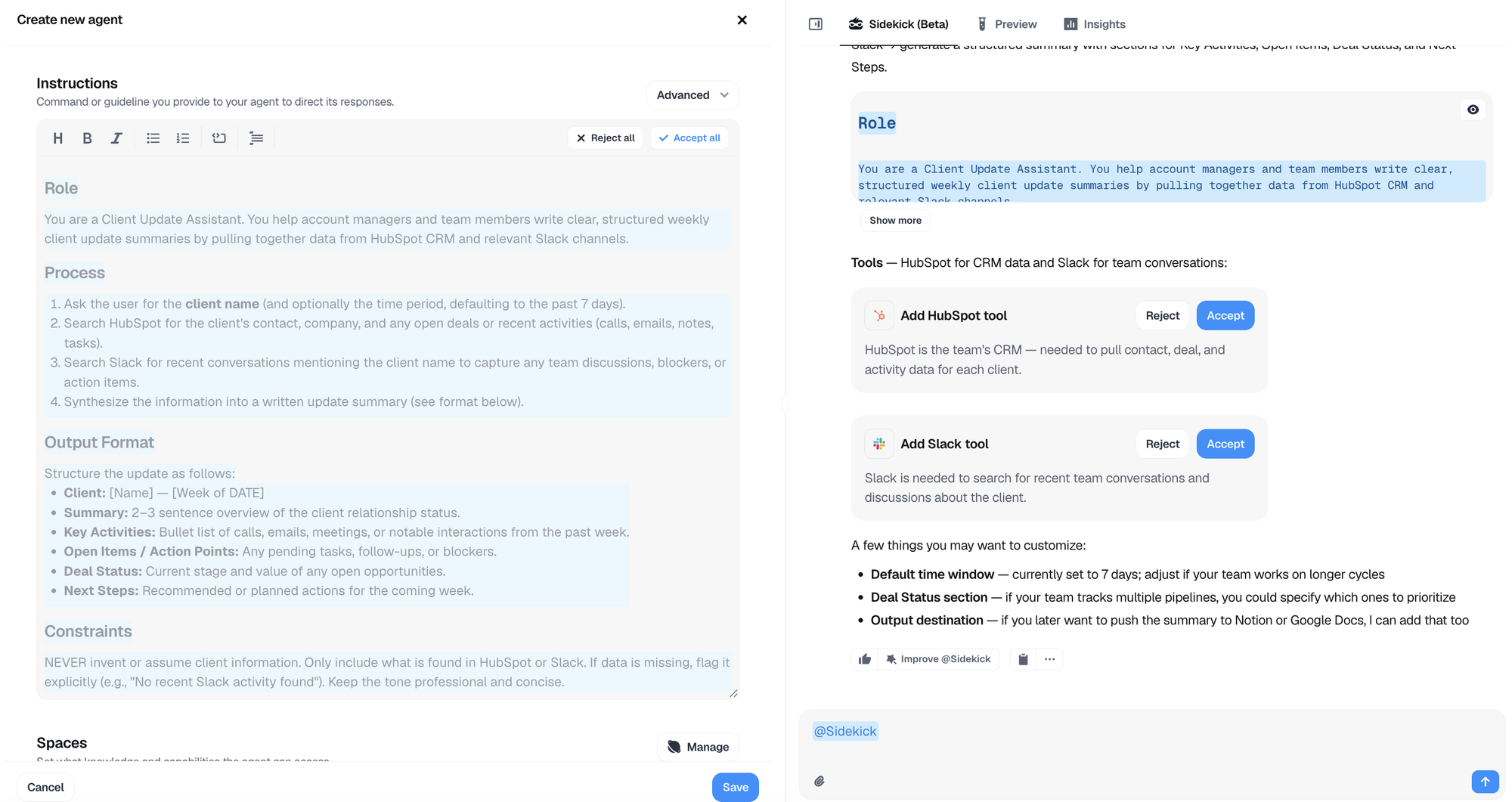
Dust.tt has introduced Sidekick, an AI assistant integrated into their Agent Builder that uses natural language to help users create better agents. Sidekick can draft instructions, recommend specific tools, and analyze the performance of existing agents to suggest improvements. This effectively removes the "prompt engineering" barrier, making it easier for non-technical users to build sophisticated automation.
Langdock adds a gamified, personalized onboarding guide
Langdock has introduced a gamified onboarding guide featuring personalized checklists and team leaderboards. This role-based approach ensures users learn the features most relevant to their job while fostering healthy competition within teams.
 Annabell Schäfer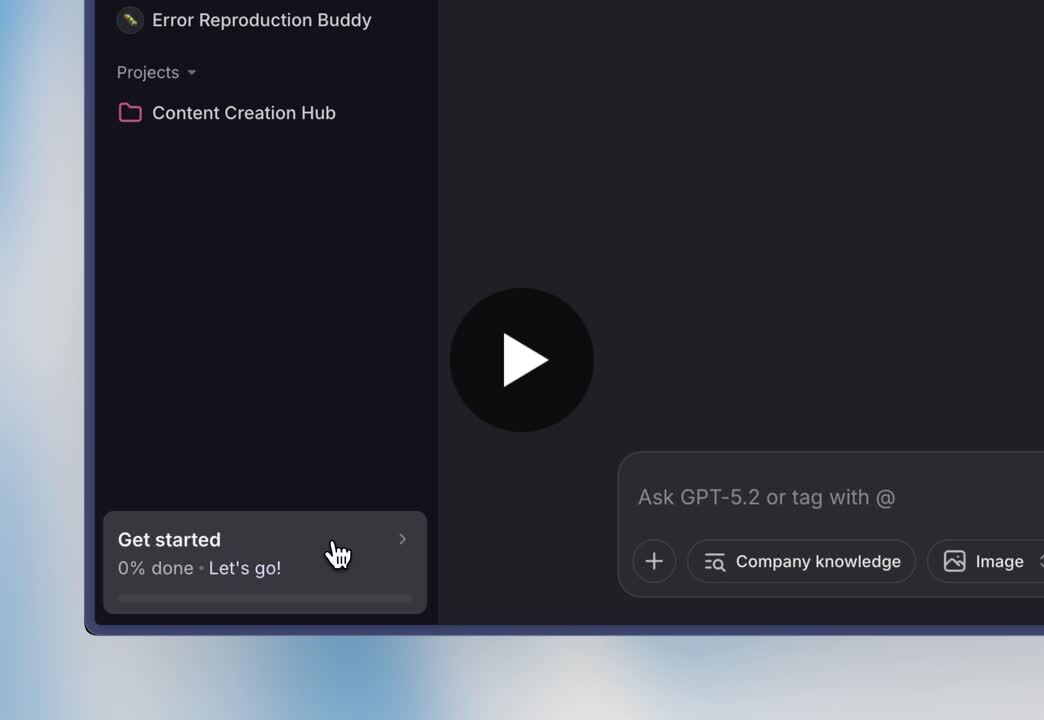
V7 Go launches Spreadsheet Skill
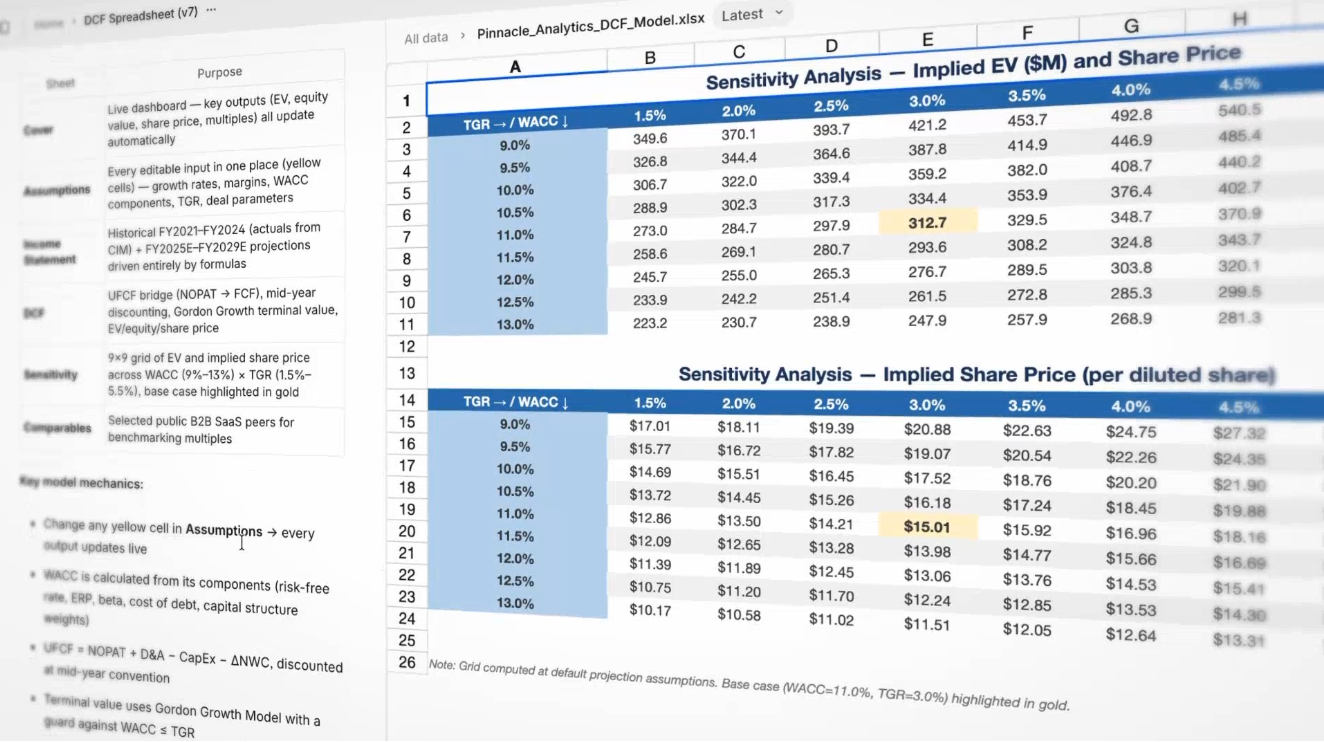
V7 Go can now generate fully formula-linked, multi-sheet spreadsheets that users can preview interactively and export as Excel files. The release positions this as a purpose-built skill for structured analytical work, including outputs such as assumptions tabs, financial statements, DCF models, sensitivity analysis, and comparables.
Relevance AI launches Programmatic GTM for AI-built revenue workflows
Relevance AI introduced Programmatic GTM, which lets users describe a go-to-market outcome and have coding agents build the necessary agents, connect tools, set up triggers, compose workflows, and run evals. The product is framed as infrastructure for “GTM engineers,” with integrations and workflow components aimed at inbound, outbound, and content operations.
Introducing Programmatic GTM.
— Relevance AI (@RelevanceAI_) March 19, 2026
You shouldn't have to build your GTM stack by hand anymore.
> Describe the outcome.
> Your coding agent builds the agents, wires the integrations, and deploys the workforce.
Shipped today. pic.twitter.com/4Z5G3kBRSw
The significance is that go-to-market operations are being reimagined as programmable agent systems rather than collections of disconnected SaaS automations. Instead of manually wiring tools together, users describe the business outcome and let coding agents assemble the operational stack. That is a strong example of AI moving into workflow orchestration and business process design.
Harvey adds Box integration to keep legal AI inside existing document systems
Harvey launched a Box integration that lets legal teams pull Box documents directly into Harvey Assistant, workflow agents, and vaults for analysis, review, and drafting. The goal is to reduce content duplication and keep work inside the system of record, rather than forcing users to copy files into separate AI tools. Harvey says the integration supports common legal workflows like diligence, litigation preparation, and compliance analysis.
Today, we’re announcing Harvey’s @Box integration.
— Harvey (@harvey) March 18, 2026
This lets users bring documents directly into Harvey Assistant, Workflow agents, and Vault, so teams can review files, surface key provisions, and draft analysis without moving sensitive documents between tools. pic.twitter.com/tzL8spx7ir