🤖 The Blockbrain Brief #15

ServiceNow embeds Claude for autonomous app building, Anthropic harmonizes workflows with new integrations, Gemini turns vision into an active agentic process, and open-source models challenge Big Tech's dominance.
📩 High-level Summary
- ServiceNow × Claude: ServiceNow has chosen Claude to power its "Build Agent," enabling enterprises to generate apps and workflows autonomously. This partnership highlights the shift toward "AI-native workflows" where models drive business logic rather than just chat.
- Anthropic's Workflow Harmonization: New "Interactive Apps" (via MCP) allow Claude to control tools like Slack and Asana directly. This signals that the market isn't looking for an "all-in-one" replacement app, but an orchestration layer that harmonizes existing tools seamlessly.
- Gemini's Agentic Vision: Google's Gemini 3 Flash introduces a "Think, Act, Observe" loop, transforming computer vision from passive description into active investigation. However, we must wait to see if it supports EU data residency before implementation.
- The Rise of "Doer" Agents: From Airtable’s new "Superagent" to the viral "Moltbot," the industry is pivoting from chatbots to autonomous agents that execute complex research, schedule flights, and manage projects without human hand-holding.
- Open Source Power: Startup Arcee AI released a 400B parameter model to challenge Meta, while Microsoft unveiled the Maia 200 chip to cut inference costs. This infrastructure war is crucial as enterprises seek high-performance, private alternatives to closed APIs.
- OpenAI Ads: OpenAI’s move to charge ~$60 CPM for ads validates the premium value of conversational attention, forcing brands to rethink how they reach users who no longer click strictly on "blue links."
Model Capabilities
Anthropic Integrates Interactive MCP Apps into Claude
Anthropic has launched a significant update allowing Claude users on Pro, Team, and Enterprise plans to interact with external productivity tools without leaving the chat interface. This integration supports the Model Context Protocol (MCP), enabling users to perform tasks:
- drafting Slack messages
- building Asana timelines
- editing Figma diagrams,
- managing Box files directly within the AI environment.
Your work tools are now interactive in Claude.
— Claude (@claudeai) January 26, 2026
Draft Slack messages, visualize ideas as Figma diagrams, or build and see Asana timelines. pic.twitter.com/ROWwUOU5vA
Users can now orchestrate complex tasks across multiple software ecosystems seamlessly, streamlining operations that previously required constant context switching between apps.
Anthropic Prepares New Sketch Tool
Anthropic is developing a "Sketch" feature, a quality-of-life improvement that introduces a whiteboard interface directly into the conversation. This tool allows users to draw mockups, diagrams, or rough ideas and attach them immediately to the chat for Claude to analyze or iterate upon.
Anthropic is developing a new Sketch tool for Claude, allowing users to draw their ideas directly on the canvas before uploading them as an attachment.
— TestingCatalog News 🗞 (@testingcatalog) January 28, 2026
Additionally 👀
- Updated system prompt for Knowledge bases.
- A possibility to start Cowork tasks from Projects.
- A new… pic.twitter.com/pH2ENJweAE
This feature acknowledges that text is often insufficient for conveying spatial or structural ideas. By enabling freeform drawing, Anthropic is positioning Claude as a more collaborative partner for designers, architects, and product managers who "think in ink."
ServiceNow Chooses Claude to Power Customer Apps
ServiceNow has officially selected Anthropic’s Claude as the default AI model for its "Build Agent" tool. This integration allows developers of all skill levels to create AI agents that can reason, make decisions, and execute tasks autonomously within the ServiceNow platform. Internally, ServiceNow is already deploying Claude to its 29,000 employees, reporting massive efficiency gains such as a 95% reduction in sales preparation time.
This partnership signals a shift towards "AI-native workflows" where the AI is not just a chatbot but a core engine driving app development and business logic. By embedding Claude directly into the Build Agent, ServiceNow is enabling enterprises to build complex, agentic applications with built-in governance and compliance, effectively democratizing high-level app development across the enterprise.
AI Agents & Tools
Google Introduces "Agentic Vision" in Gemini 3 Flash
Google is redefining image analysis with "Agentic Vision," a process that turns static viewing into an active investigation. Unlike traditional models that just "look" at an image once, Gemini 3 Flash utilizes a "Think, Act, Observe" loop. It formulates a plan, executes Python code to manipulate the image (zooming, cropping, counting), and then re-observes the new data to ground its answers in evidence.
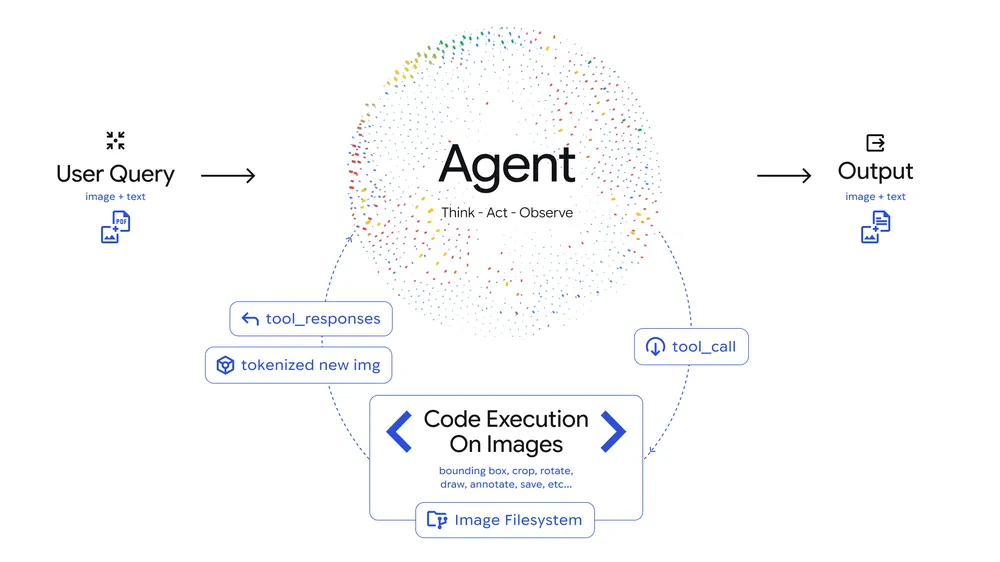
This iterative approach allows the model to handle complex visual queries with much higher accuracy. By actively engaging with the visual data, treating it as a dynamic object rather than a static file, the model can solve multi-step visual reasoning problems that were previously impossible for standard multimodal LLMs.
Startup Arcee AI Builds 400B Open Source Model to Best Meta
Arcee AI, a small startup, has released "Trinity," a massive 400-billion parameter open-source model. Released under the Apache license, it is one of the largest truly open foundation models ever produced by a U.S. company. Arcee claims that Trinity outperforms Meta’s Llama models in several key benchmarks, offering a viable alternative for enterprises that need high-performance AI without the restrictions of closed APIs.
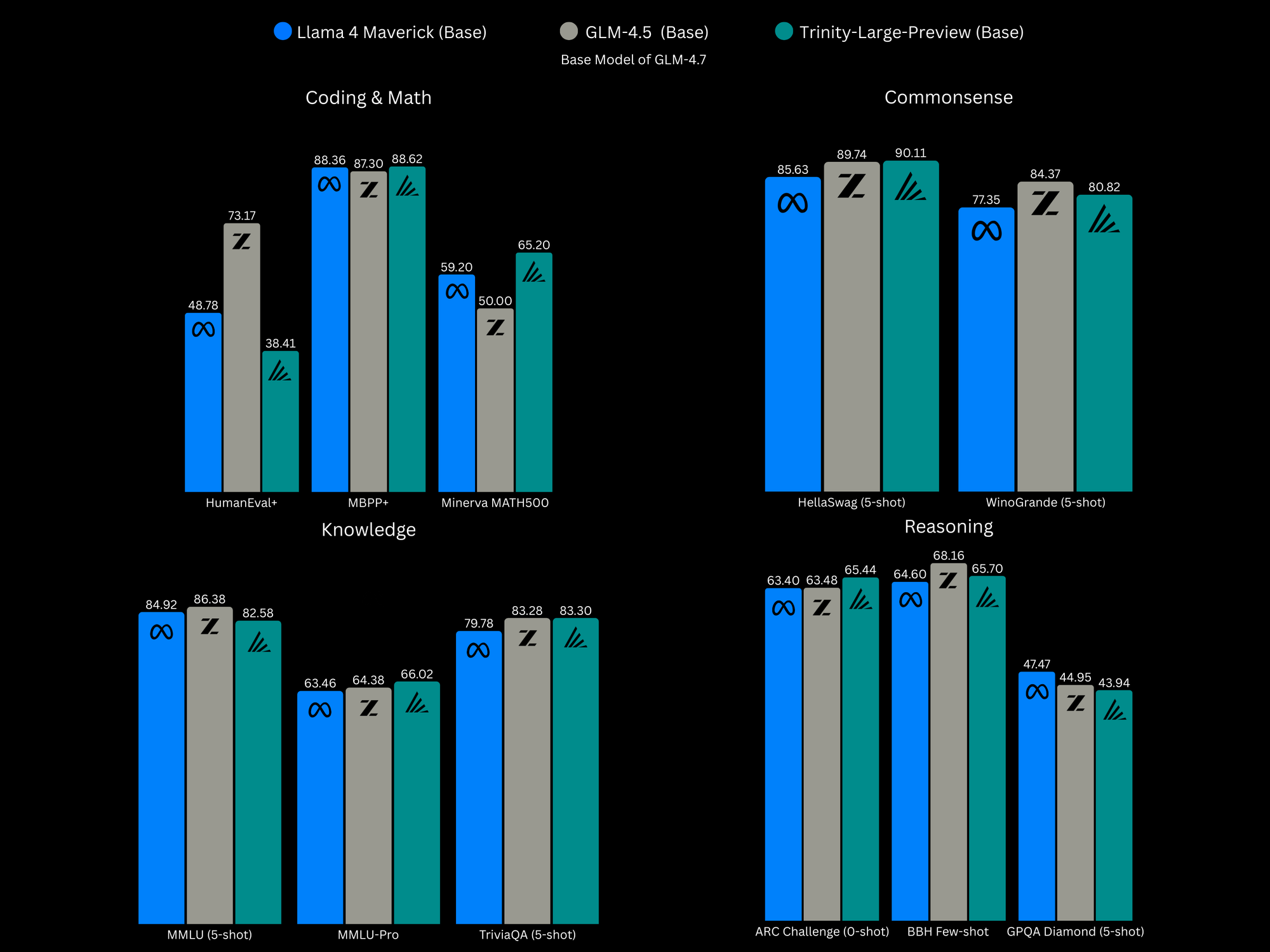
The release of Trinity challenges the dominance of Big Tech in the foundation model space. By offering a model of this size completely open-source, Arcee is giving developers and enterprises the ability to fine-tune and host powerful AI on their own infrastructure, ensuring data privacy and control that proprietary models cannot match.
What is Clawdbot (now Moltbot)?
Clawdbot, a viral personal AI assistant project, has rebranded to "Moltbot" following a trademark dispute with Anthropic. Despite the name change, the tool remains a powerful example of "agentic AI"—an AI that doesn't just talk but does. It can manage calendars, send messages via third-party apps, check users in for flights, and execute tasks on a user's local machine.
While it started as a developer's personal project, its ability to execute real-world actions has attracted thousands of users. It highlights the growing consumer demand for AI that can act as a true executive assistant, capable of navigating the web and apps to complete chores autonomously.
Airtable Jumps into the AI Agent Game with Superagent
Airtable has launched its first standalone product in 13 years: Superagent. This multi-agent system is designed to eclipse standard database features by autonomously performing complex research and synthesis tasks. When given a goal, such as "research expansion into Europe," Superagent builds a plan and deploys specialized sub-agents to handle different aspects: one for financials, one for competitor analysis, and another for news.
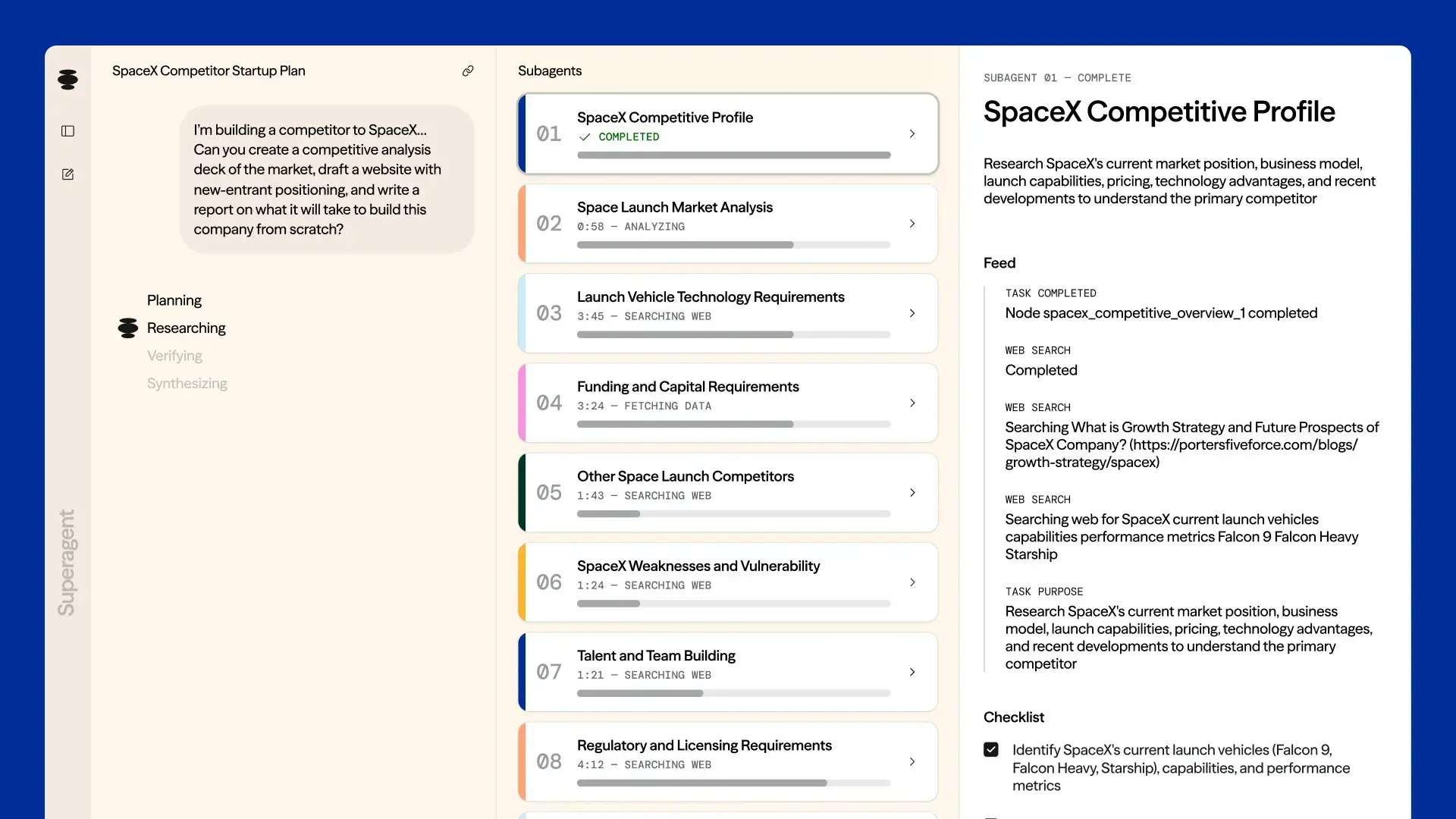
The system then synthesizes the work of these parallel agents into a finished deliverable. This moves Airtable from a place to store data to a platform that generates high-value business intelligence, proving that SaaS platforms are racing to become AI-first work orchestrators.
Business & Infrastructure
OpenAI is Charging ChatGPT Ads for the price of TV Ads
OpenAI has reportedly set the price for ads within ChatGPT at approximately $60 per 1,000 impressions (CPM). Notably, they are charging by impression rather than click, a departure from standard search advertising. This pricing is comparable to premium TV slots, reflecting the high value of user attention in a conversational AI interface where users are deeply engaged but less likely to click away to external links.
This move validates the monetization potential of AI interfaces but also highlights a shift in user behavior. AI users want answers in the chat, not a list of blue links. Advertisers are paying a premium for brand awareness within that highly focused "consultation" environment.
Microsoft's Maia 200 AI Chip Claims Performance Lead
Microsoft has unveiled the Maia 200, a custom AI chip designed specifically for inference (running the models) rather than training them. Built on a 3nm process, Microsoft claims it delivers 30% better performance per dollar than current competitors (like Nvidia or Google's TPUs).
As AI models get larger and usage skyrockets, the cost of inference becomes the main bottleneck. By building their own silicon, Microsoft is vertically integrating to drive down these costs for Azure and OpenAI services.