🤖 The Blockbrain Brief #9

AI is going enterprise-ready: daily briefing agents, turnkey tool stacks, and repeatable workflows that run faster and cheaper.
📩 High-level Summary
- Voice: xAI is pushing voice agents as a designed for production, signaling that “talking to agents” is becoming a default way users interact with tools, not a novelty.
- Enterprise Ready Agents: The differentiator is shifting from “best model” to best agent stack (a bundled toolkit: web + X search, file/collections search with citations, code execution, extensible connectors)
- ChatGPT Push: OpenAI is productizing creation inside ChatGPT through stronger image editing workflows, branched chats on mobile, and an emerging “app directory/app store” model that turns ChatGPT into a distribution layer for interactive tools
- Cost + Compute Strategy: Prompt caching makes repeated long prompts dramatically cheaper and faster, while big platform moves (cloud/chip deals) and NVIDIA’s open Nemotron push signal a market where performance, portability, and unit economics all matter at scale.
Agent & Voice Stack Updates
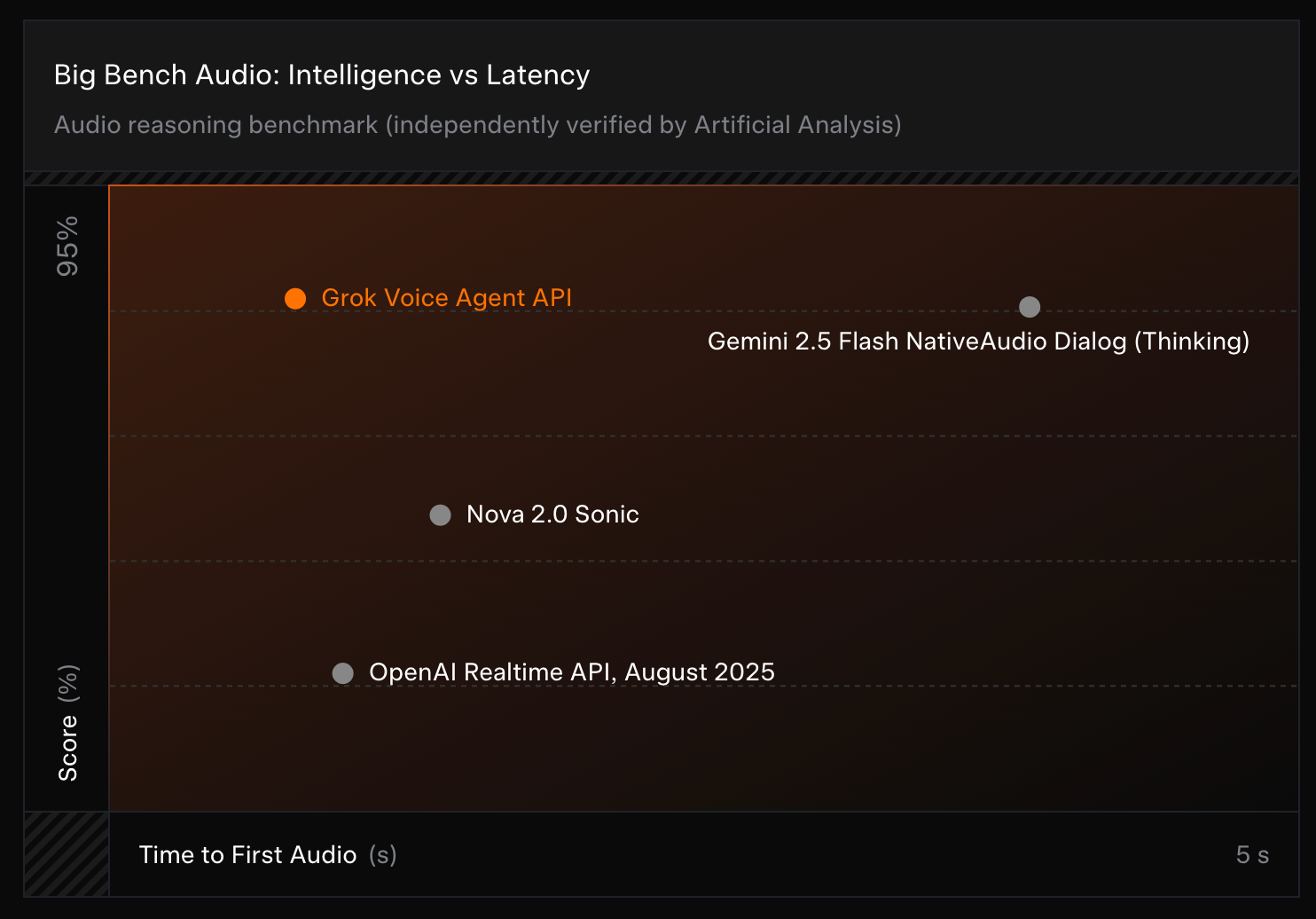
xAI's Grok Voice Agent API: "the "fastest, most intelligent voice agents available on the market"
xAI says it’s opening the same voice stack used by Grok in Tesla vehicles to developers, positioning it as a full voice-agent platform rather than just speech-to-text. The announcement highlights low-latency voice generation, multi-language support, and strong performance on audio benchmarks, with an emphasis on building assistants that can converse naturally (including dialects and pronunciations) without “robotic” pacing.
From a product perspective, this is xAI trying to push this as “production-grade voice agents” (not just TTS): fast turn-taking, strong speech understanding, and a voice-first agent experience aimed at real deployments.
Grok 4.1 Fast + Agent Tools API
xAI introduces Grok 4.1 Fast as its “best tool-calling model,” emphasizing 2M context and consistency over long contexts via long-horizon reinforcement learning focused on multi-turn scenarios. They highlight a key problem with agents, performance drops as context grows, and say they addressed it using long-horizon reinforcement learning with strong emphasis on multi-turn scenarios, aiming for consistent performance across the full context length
Alongside the model, xAI launched the Agent Tools API, described as a suite of server-side tools that run on xAI infrastructure so developers don’t need to manage API keys, rate limits, sandboxes, or retrieval pipelines. The agent can decide when to use tools (including parallel tool calls over multiple turns) to complete tasks end-to-end.
What tools are included in the Agent Tools API?
- Search Tools: Real-time X search (“realtime X … search”) and Web search (“internet search”)
- Files Search / Collections Search: Search + retrieve relevant documents from uploaded files, with citations
- Code Execution: Python code execution in a secure sandbox for analysis/simulations
- MCP Tools: Connect to external MCP servers for custom third-party tools
Google “CC”: AI Gmail agent for daily briefings
Google Labs introduces CC, an experimental AI productivity agent built with Gemini that connects Gmail, Calendar, Drive, and the wider web to send a “Your Day Ahead” briefing each morning. It synthesizes schedule + tasks into a single summary (e.g., bills, prep for appointments), can draft emails / provide calendar links, and you can “steer” it by replying or emailing CC directly.
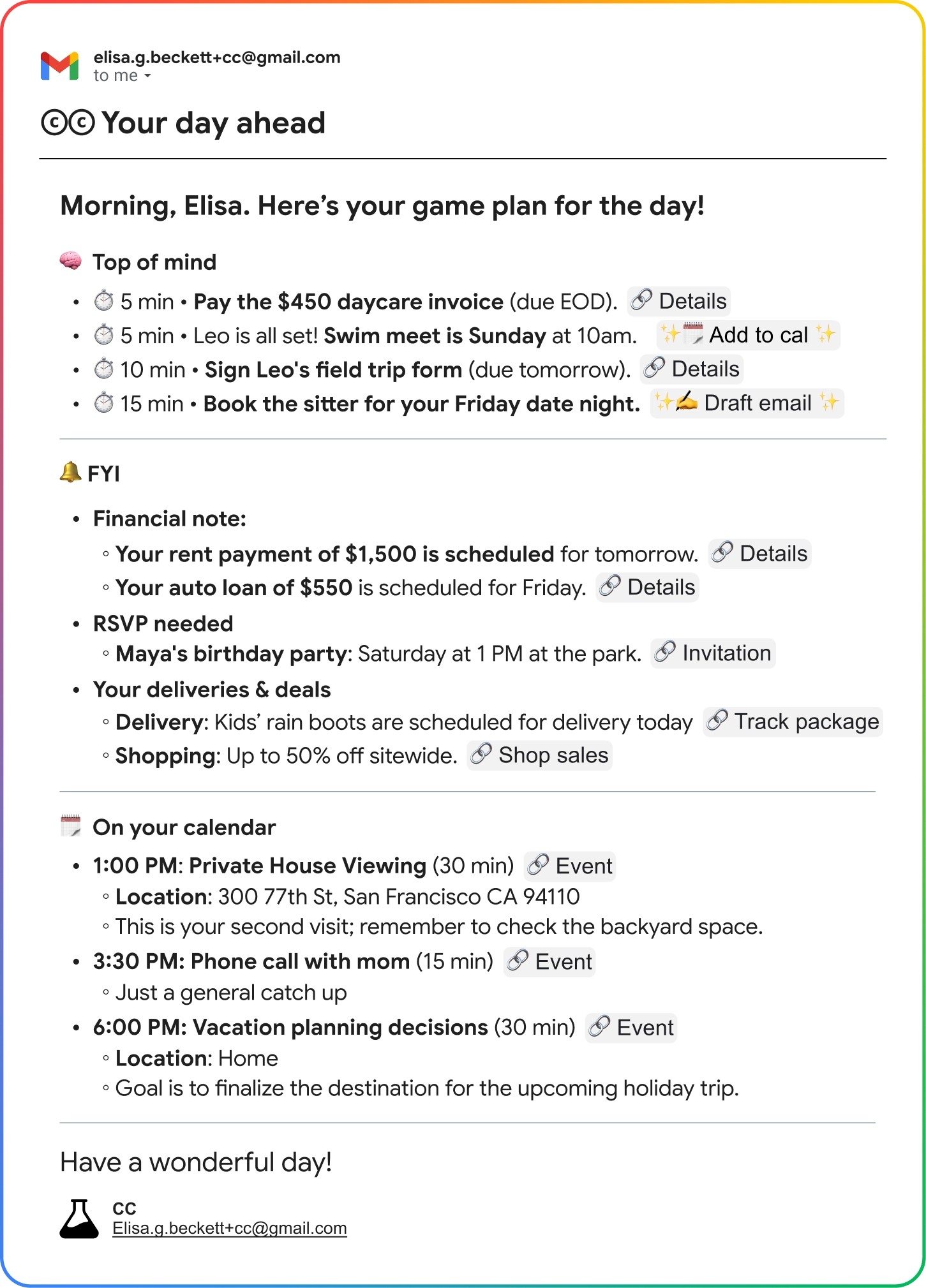
Image & Creative Models
ChatGPT Images Gallery?
OpenAI announces an updated image experience in ChatGPT, emphasizing editing that can add/subtract/merge/blend/transpose while preserving what matters in the original.
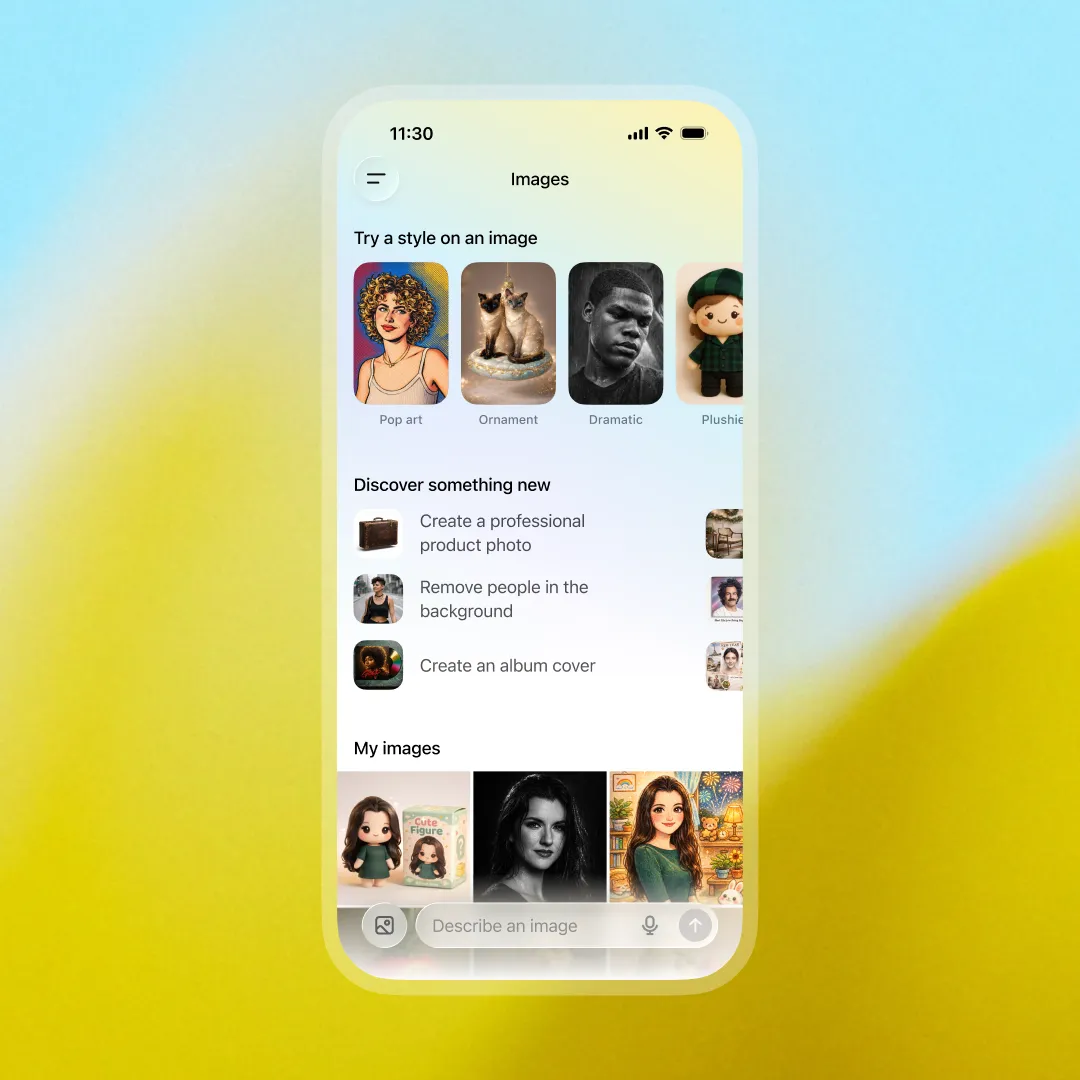
They also introduce a dedicated Images home inside ChatGPT (sidebar on mobile and chatgpt.com) with preset filters and prompts to speed exploration which is often without needing to write a prompt.
0:53 of OpenAI's Youtube Announcement
Black Forest Labs launches FLUX.2 [max]: real-time grounded image generation + editing
FLUX.2 [max] is positioned as the highest-quality model in the FLUX.2 family, designed for both image generation and editing with a focus on maximum performance. The key promise is strong editing consistency across tasks, plus the strongest prompt-following in the family which means it should preserve intent and maintain faithful style representation when you make iterative changes (e.g., tweak layout, swap elements, adjust look-and-feel) without the output drifting.
A standout capability is grounded generation using real-time web context. Instead of manually collecting reference images or mood boards, FLUX.2 [max] aims to let you generate visuals anchored in what’s currently happening, like trending products, current events, or the latest styles, so outputs can reflect “what’s true right now,” not just general training-time knowledge.
Models, Openness & Agent Infrastructure
NVIDIA's Open source Nemotron 3 family (open models for agentic systems)
NVIDIA details Nemotron 3 as an open family (Nano, Super, Ultra) built for agentic, long-context, multi-step workflows. The technical blog describes a hybrid Mamba-Transformer Mixture-of-Experts (MoE) architecture, native 1M-token context, and post-training with multi-environment reinforcement learning using NeMo Gym (open-source), with an emphasis on openness (weights, recipes, datasets).
Nano is described as 30B total / 3B active and available now; Super/Ultra are planned for first half of 2026, with additional techniques like latent MoE, multi-token prediction, and NVFP4 precision discussed for efficiency.
What is Prompt Caching? And why it's 10x Cheaper
Prompt caching is a way for LLM providers to make repeated long prompts both cheaper and faster by reusing internal computation from earlier requests and not by reusing the model’s final answer (you can resend the same prompt and still get different outputs).
The ngrok deep-dive explains what’s actually cached: during inference, the expensive part is the transformer’s attention math, and providers can cache the intermediate Key (K) and Value (V) matrices which is often called “KV caching.” Instead of recalculating attention for the same prompt prefix over and over, the system reuses cached K/V for matching prefixes, which cuts compute and reduces time-to-first-token (Anthropic cites up to ~85% latency reduction for long prompts).
In practice, providers typically retain these cached entries for ~5–10 minutes; if your next request starts with the same prompt prefix, they can reuse the cached K/V (and can even partially match on shared prefixes).
The article also notes a major provider difference: OpenAI tries to do this automatically (the author observed ~50% hit rate when immediately resending), while Anthropic gives you explicit control over caching duration (the author observed 100% hits when caching was requested), which can be better when you need predictable latency on large contexts.
Lovable launches connectors to “supercharge” app-building
Lovable is leaning into connectors as the shortcut to building more capable apps. In their docs, they frame integrations as three layers: (1) Shared connectors that add capabilities your published app can call, (2) Personal connectors (MCP servers) that give the Lovable Agent context while you’re building, and (3) Any API support where Lovable can wire in custom APIs and securely handle secrets via Lovable Cloud + Edge Functions when authentication is needed.
 Professor Game
ChatGPT as a Platform (Apps + UX)
“Branched chats” now on iOS + Android
Coverage indicates ChatGPT’s branching conversations feature has expanded to mobile (iOS/Android), extending the “fork this thread” workflow beyond desktop/web.
Branched chats are now available on iOS and Android, too. https://t.co/Z6KbIr5YBS pic.twitter.com/FsmBm5ntcP
— OpenAI (@OpenAI) December 15, 2025
AI is more than just text-based now.
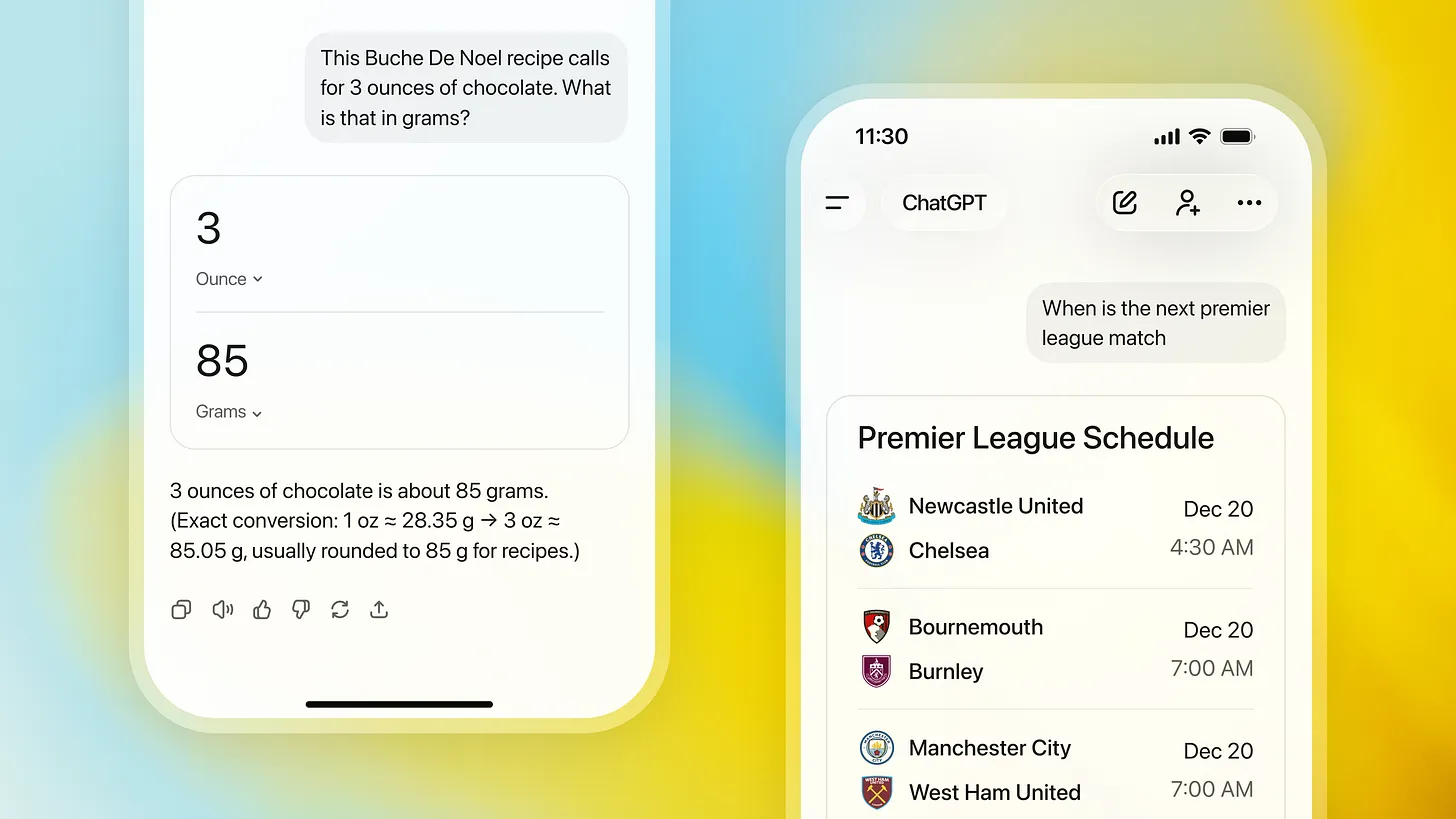
A key message: ChatGPT is moving from primarily text chat toward more dynamic, component-based experiences where the right tools appear at the right time.
ChatGPT launches an “app store”
TechCrunch reports OpenAI is enabling developers to submit apps for review and potential publication and has introduced a new app directory inside ChatGPT’s tools menu (quickly dubbed an “app store”).
OpenAI’s earlier “Apps in ChatGPT” post describes apps as interactive experiences inside chat, built via an Apps SDK (preview) and positioned as a developer distribution channel, with a public directory and publication path.
Lovable Meets ChatGPT
Lovable is showing up inside ChatGPT as an app, pitching a simple workflow: brainstorm in ChatGPT, then turn that conversation into a real product without leaving the chat. The promise is you can go from idea → full-stack app by tagging @Lovable, using your conversation as the spec.
Move from conversations to creations, get your team aligned quickly, create internal tools on demand, and generate clickable mockups you can put in front of customers
What this enables:
- Turn any conversation into a working application and convert notes/ideas into production-ready software in minutes.
- Interactive prototypes fast as it “bring ideas to life the second they spark.”
- No technical cofounder required
 Professor Game
Market / Infra Business Moves
Amazon reportedly discussing $10B+ investment in OpenAI
Reporting indicates Amazon is in talks around a large investment in OpenAI, alongside discussions that could include OpenAI using Amazon’s Trainium chips. Coverage frames this as part of escalating competition in AI compute stacks and strategic partnerships between model providers and cloud/chip ecosystems.