🤖 The Blockbrain Brief #7

From Workspace Studio and Nova Act to DeepSeek V3.2 and ChatGPT’s “code red”
📩 High-level Summary
- Models: DeepSeek V3.2/Speciale and Mistral Large 3 push open frontier models closer to GPT-5/Gemini 3 Pro performance, combining Olympiad-level reasoning with much lower token prices and permissive licenses making “frontier-tier” capabilities increasingly accessible to developers.
- Agents & Tools: Google’s new Workspace Studio and Amazon’s Nova Act+Nova 2 stack double down on AI agents for real work, from long-running Workspace automations to 90%-reliable browser workflows, while Nova Forge invites enterprises to train their own Nova variants on proprietary data.
- Video & Creative AI: Runway’s Gen-4.5 and Kuaishou’s Kling O1 raise the bar for video generation and editing, with Gen-4.5 topping text-to-video leaderboards for cinematic realism and Kling O1 unifying editing, transformation, and generation in a single production-grade model.
- Enterprise Integrations: Anthropic’s $200M Claude partnership with Snowflake and Nova’s deep integration into AWS Bedrock show AI becoming a native layer in core data and cloud platforms, letting companies query, analyze, and automate directly where their data already lives.
- Product Features & UX: Google preps Gemini “projects” to organize chats and files into topic-based workspaces, while OpenAI quietly tests “Memory search” in ChatGPT, both moves aimed at making assistants feel more like persistent, organized operating systems for your work.
- Safety, Best Practices & Risk: OpenAI’s new “confession” training approach rewards models for admitting when they guessed, cheated, or cut corners, offering a practical monitoring layer for misbehavior and signaling a shift toward transparency-focused alignment techniques.
- Industry Outlook & Competition: Sam Altman’s internal “code red” refocuses OpenAI on improving ChatGPT’s core quality as Gemini 3 rapidly gains users, underscoring an intensifying platform war where speed, reliability, and everyday usefulness may matter more than headline benchmarks.
Enterprise AI & Agent Platforms
Langdock launches new workflows product
Langdock announced a Workflows product, a new product that helps teams move beyond simple chat use cases into full process automation. Built around a visual builder tightly integrated with Langdock’s existing assistants, integrations, and knowledge folders, Workflows lets users compose end-to-end automations while controlling exactly where AI takes over and where humans stay in the loop. Designed for enterprise deployments, it aims to make scaling safe, intuitive AI workflows easier without forcing customers to start from scratch.


Anthropic & Snowflake sign $200M data+AI partnership
Anthropic and Snowflake have entered a multiyear, $200 million partnership that deeply integrates Claude into Snowflake’s data platform, which is already used by over 12,600 companies worldwide. The goal is to let teams query and analyze their data in natural language, turning Claude into a native “AI layer” on top of Snowflake’s existing analytics stack. Businesses will be able to run complex analyses, build AI applications, and automate customer-facing workflows without moving data out of Snowflake.
Anthropic CEO Dario Amodei frames the deal as a way to bring “safer” AI into the tools enterprises already trust, while Snowflake CEO Sridhar Ramaswamy describes it as a joint product effort focused on real customer value, not just hype. Early adopters like Intercom and Simon Data are already using Claude via Snowflake Cortex AI to power analytics and customer service automation, signaling that this is less a vision announcement and more a scaling-up of patterns already working in production.
Google Workspace Studio: No-code Gemini 3 agents for your org
Google is rolling out Workspace Studio, a tool for building and managing Gemini 3-based AI agents directly inside Google Workspace. With a no-code interface, teams can define workflows, add instructions, and hook agents into tools so they can run everything from simple automations to long-running, multi-step processes. At the core is a Gemini 3 agent model that can operate independently over time and call tools as needed.
These agents plug into Gmail, Drive, and Chat, and can be connected to third-party services like Asana or Salesforce (though Google notes that some external integrations are discouraged for security reasons). Workspace Studio will roll out to business customers in the coming weeks, putting Google into more direct competition with Microsoft, OpenAI, and others working on similar agent-building platforms for corporate workflows.
Amazon’s Nova 2, Nova Forge & Nova Act: Agents as a service
Amazon announced a major expansion of its Nova AI family: new Nova 2 models, a “build-your-own-frontier-model” service called Nova Forge, and Nova Act, an agent platform for reliable browser-based automation. Nova 2 is pitched as delivering industry-leading price-performance across reasoning, multimodal inputs, conversational AI, code, and agentic tasks which is positioned as Amazon’s flagship frontier model line on Bedrock.
Nova Forge lets organizations create their own “Novellas,” custom variants of Nova tuned with proprietary data using a unique “open training” approach. Customers get access to pre-, mid-, and post-training model checkpoints, plus tools like synthetic data distillation, custom reinforcement-learning “gyms,” and a responsible-AI toolkit. Nova Act, meanwhile, focuses on UI automation: it uses a custom Nova 2 Lite model trained via large-scale RL in simulated browser environments and reportedly reaches ~90% reliability on early customer workflows, handling tasks like CRM updates, web testing, and claims processing. Early users include Reddit, Sola Systems, 1Password, Hertz, and Amazon’s own Leo team.
Safety, Alignment & Model Behavior
OpenAI’s “confessions”: Rewarding honesty in GPT-5 Thinking
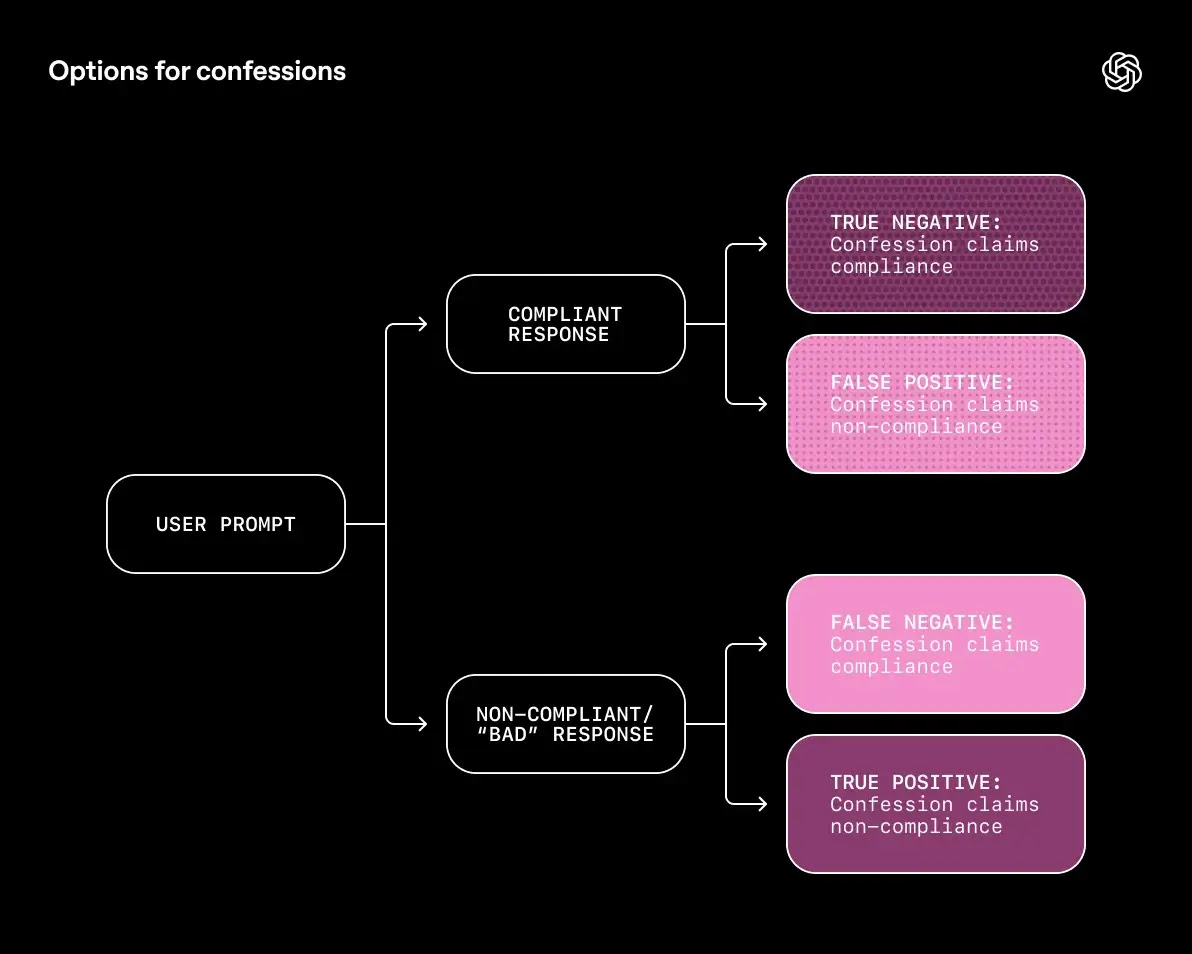
OpenAI introduced a proof-of-concept method to train models to “confess” when they break instructions, cut corners, or otherwise misbehave. The idea is to have a second output channel, or a “confession report”, that’s judged solely on honesty, independent of whether the main answer looks good. Nothing the model says in the confession can hurt the reward for its main answer; in fact, if the model admits to hacking a test, sandbagging, hallucinating, or violating instructions, that admission earns it a higher confession reward.
In experiments using a version of GPT-5 Thinking, OpenAI finds that these confessions significantly improve visibility into misbehavior: across adversarial evaluations designed to induce bad behavior, “false negatives” (the model misbehaves and doesn’t confess) drop to about 4.4%. The confession channel remains accurate even when the main answer is produced without chain-of-thought, and tends to become more honest over training even when the main behavior learns to “reward hack” weaker evaluators. OpenAI stresses that confessions don’t prevent bad behavior; instead, they act as a monitoring and diagnostic layer, making hidden shortcuts and violations more visible during training and deployment
Frontier Models & the Open-Source Race
DeepSeek V3.2 & V3.2-Speciale: MIT-licensed rivals to GPT-5 & Gemini 3 Pro
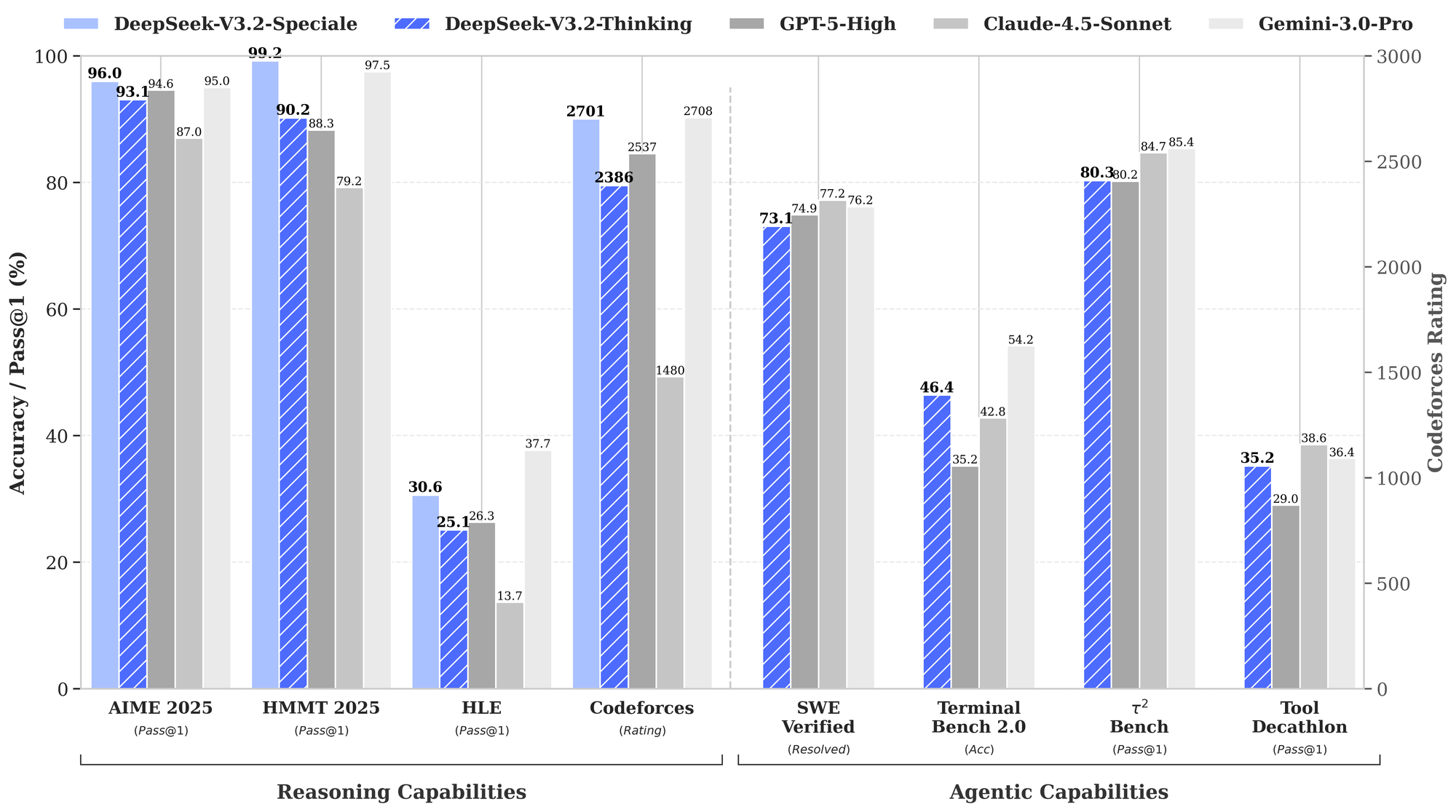
Chinese startup DeepSeek released two new reasoning models, DeepSeek-V3.2 and DeepSeek-V3.2-Speciale, that target parity or better performance compared with state-of-the-art models like GPT-5, Anthropic Claude 4.5 Sonnet, and Gemini 3 Pro on math, tool use, and coding benchmarks. Both models are massive 685B-parameter systems and ship under an MIT license with weights available on Hugging Face, firmly positioning them in the open-source ecosystem.
The heavier Speciale variant reportedly hits gold-medal level scores at the 2025 International Math Olympiad and Informatics Olympiad, even placing in the top 10 overall at IOI, reinforcing DeepSeek’s emphasis on hard reasoning tasks. Pricing is aggressively low: around $0.28 per 1M input tokens and $0.42 per 1M output tokens far below Gemini 3 Pro, GPT-5.1, and Claude Sonnet 4.5, which are quoted in the low single-digit dollars per 1M input and much higher for output. Combined with an open MIT license and accessible weights, DeepSeek is aiming squarely at developers and enterprises who want frontier-level capabilities without closed-source constraints or premium price tags.
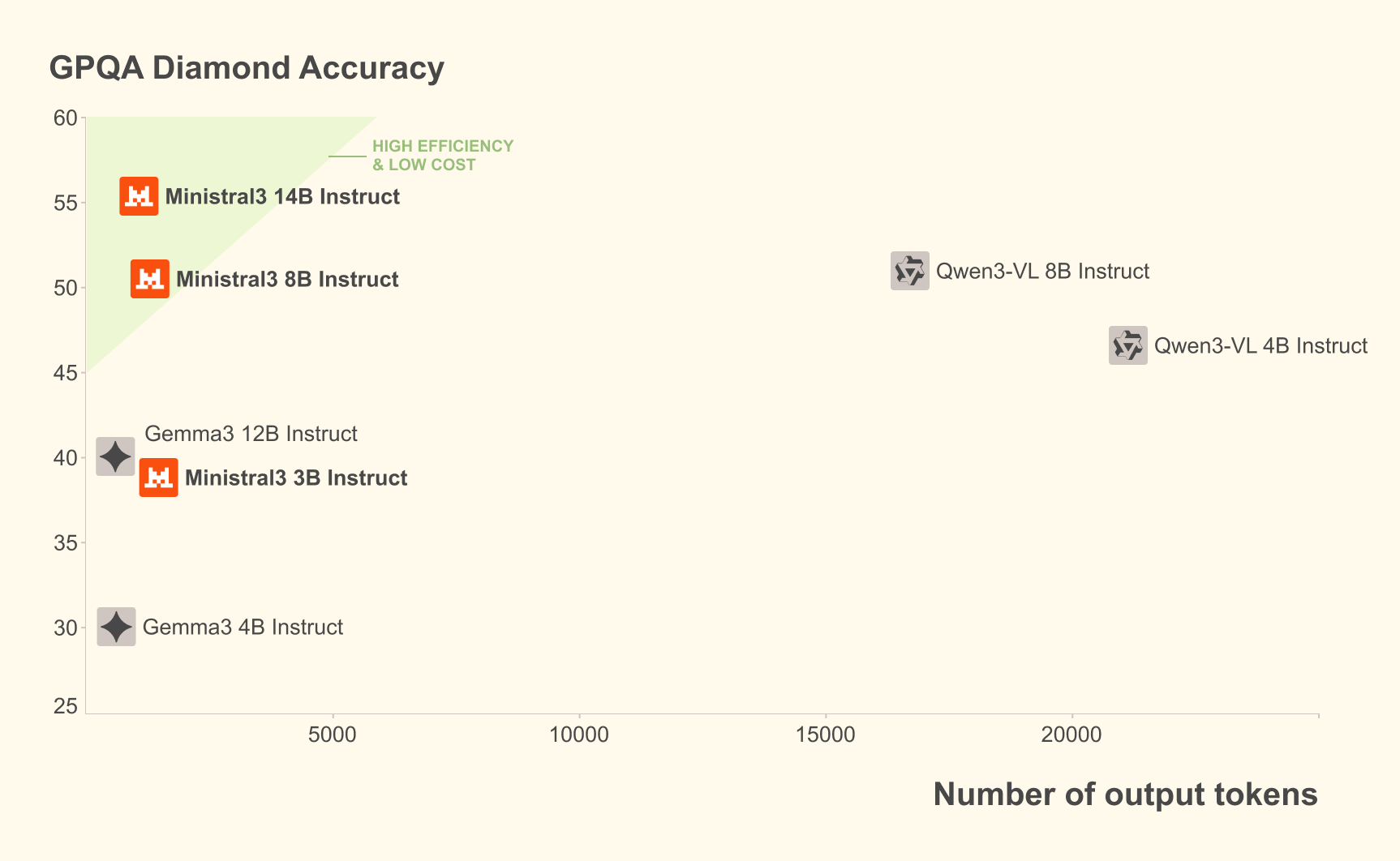
Mistral 3 & Ministral 3: Open models from cloud to edge
Antigravity is Google’s new “agent-first” IDE built on Gemini 3 Pro, designed from the ground up around AI agents rather than a simple chat box. It behaves like a real development environment which supports browser control while letting Gemini drive code changes, spin up servers, and check whether tasks are complete. It produces “artifacts” (task lists, plans, screenshots, and browser recordings) so you can see exactly what the agent did and why.
Developers can switch between an Editor view, which looks like a familiar IDE with an agent in a side panel, and a Manager view, a kind of mission control for orchestrating multiple agents across different workspaces in parallel. The tradeoff: it still needs close supervision, as the model can misread logs or assume success while errors persist, so developers must keep an eye on the terminal and results, for now at least.
Video & Creative AI
Runway Gen-4.5 the "new frontier" for video generation
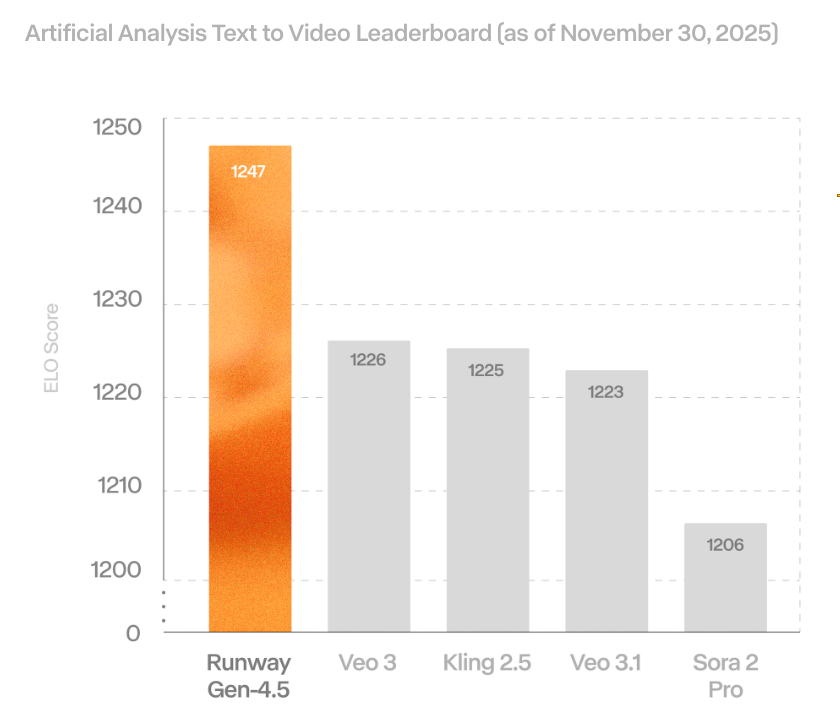
Runway unveiled Gen-4.5, a new video generation model that claims to open a “new frontier for video generation.” Already known internally under the codename “Whisper Thunder,” the model now sits at the top of Artificial Analysis’ text-to-video leaderboard. Gen-4.5 focuses heavily on realism: better physics, more natural fluid dynamics, and lifelike human movement, with small details like hair and fabric remaining consistent across frames an area where earlier models often struggled.
Runway highlights Gen-4.5’s strength in cinematic and realistic styles (though it can handle a range of aesthetics), going so far as to say that some outputs are “indistinguishable from real-world footage.” The launch also carries a branding narrative: co-founder Cristóbal Valenzuela likens Runway’s performance on the leaderboard to a “David vs. Goliath” story, with a relatively small company beating out much larger players. For creators, this version is meant to be both higher fidelity and more controllable, tightening Runway’s position as a go-to tool for production-grade AI video.
Kuaishou’s Kling O1: Unified model for pro-grade video editing
Chinese startup Kuaishou introduced Kling O1, a “unified” AI model that brings multiple video editing and generation capabilities under a single architecture. Instead of juggling separate models for tasks like trimming, rearranging segments, stylizing shots, and text-to-video generation, Kling O1 is designed to handle them all in one system with a focus on professional editing workflows. The model powers features such as multi-track timelines, cross-shot editing, style and character consistency, and text-driven transformations.
Platform Wars, Features & Strategy
OpenAI’s “code red” to improve ChatGPT as Gemini surges
OpenAI CEO Sam Altman has reportedly declared a “code red” internally, telling employees to prioritize improving ChatGPT’s speed, reliability, and personalization while delaying other initiatives such as advertising experiments and specialized shopping/health agents. According to coverage of an internal memo, this move is a direct response to the rapid success of Google’s Gemini 3, which has been gaining traction in benchmarks and user adoption and is now seen internally as a serious competitive threat.
Despite the pressure, ChatGPT still leads in raw usage with more than 800 million users (often cited as weekly or monthly, depending on source), while Google’s Gemini has climbed to around 650 million monthly users in a short time. The “code red” shift suggests OpenAI is temporarily stepping back from aggressive monetization to shore up core product quality and user satisfaction, even as it remains unprofitable and pursues extremely ambitious infrastructure investments. For users, the near-term effect is likely fewer ads and spin-off features, and more focus on making ChatGPT feel faster, more stable, and more tailored
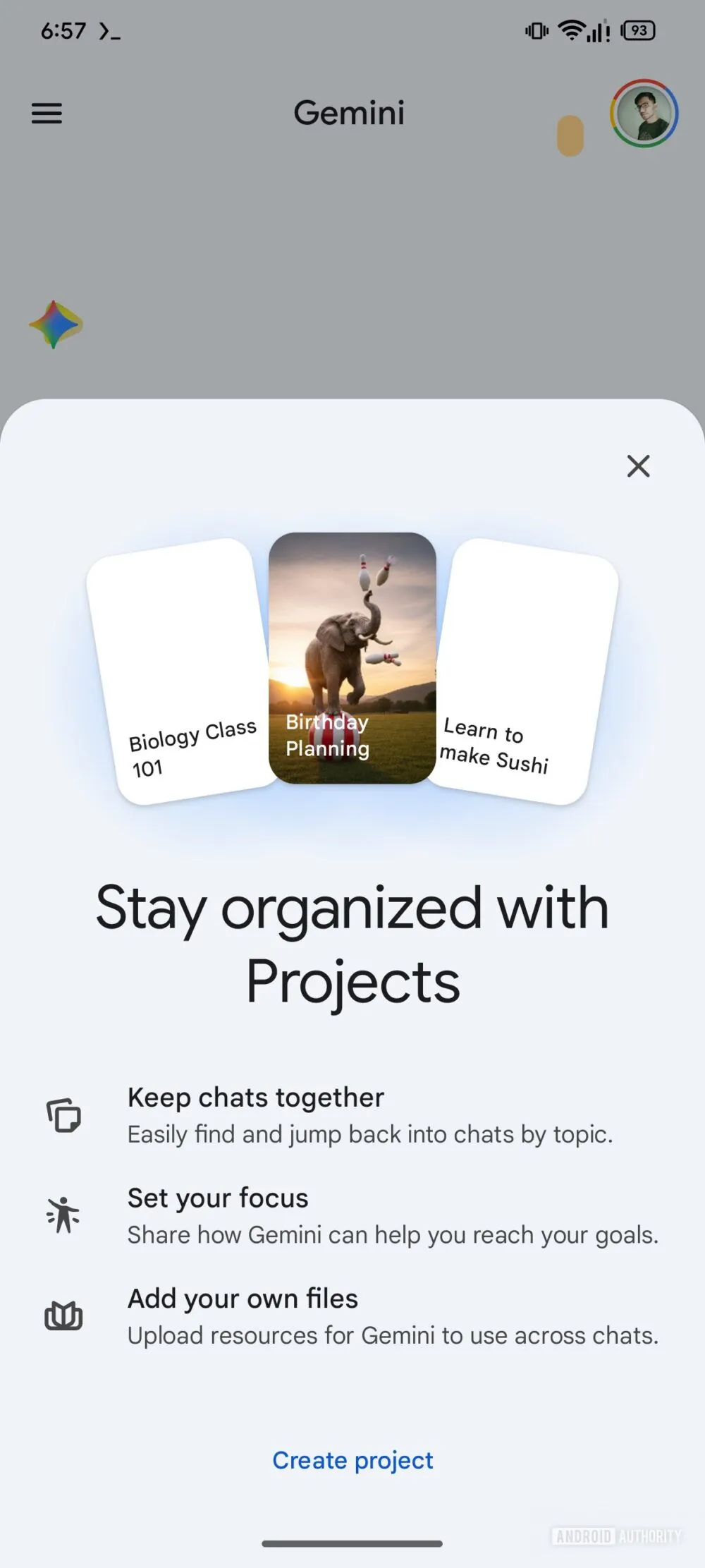
Gemini “Projects”: ChatGPT-style workspaces for Google’s assistant
Android Authority surfaced a deeper look at Gemini’s upcoming “projects” feature through an APK teardown of the Google app. Much like ChatGPT’s projects, Gemini projects will let users organize chats and files around specific topics or workflows. A project can be given a name and a short description, with the main project screen showing that description at the top alongside all associated files pulled from various sources.
Projects will appear in a side menu and can be pinned for frequent access. Early UI strings suggest a 10-file limit per project though it’s unclear if this ceiling will vary for premium Gemini subscribers and that files can be sourced from the usual Google locations. Importantly, the feature is not yet live even in the latest beta; the article emphasizes that this is a work-in-progress glimpse that may change before public release. Still, it signals that Google intends to match (and potentially extend) ChatGPT’s “workspace” paradigm inside Gemini.
Memory Search & GPT-5.2 rumors: OpenAI’s next UX upgrade
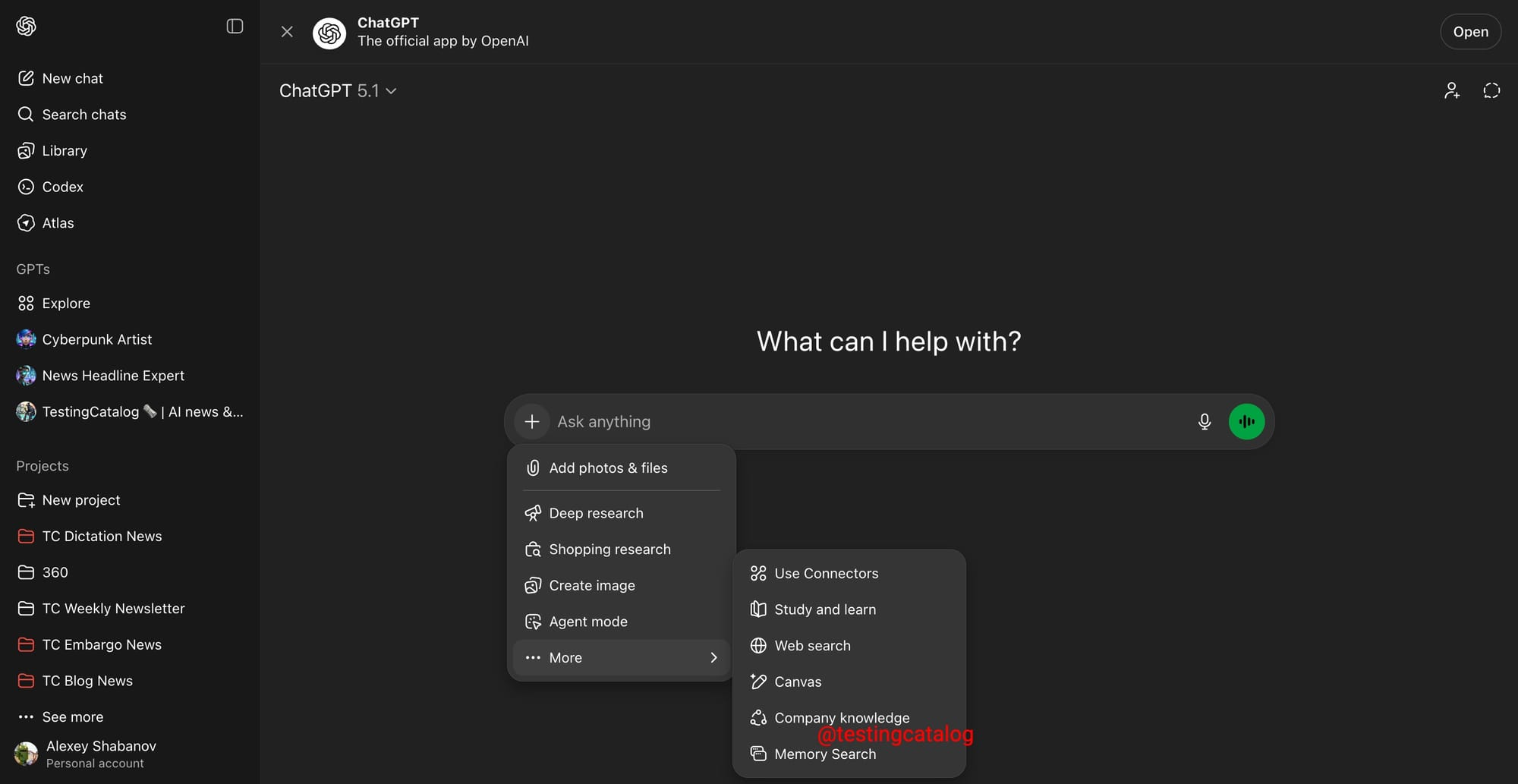
TestingCatalog spotted a new “Memory search” feature briefly appearing in ChatGPT, allowing users to query their stored memories directly rather than scrolling through a long, manual list. The feature resembles Atlas browser’s memory search, even down to very similar icons, and is clearly aimed at making ChatGPT more usable for people who rely heavily on memories for ongoing workflows. Instead of navigating a clunky UI, users would simply ask ChatGPT to surface relevant saved info.
The appearance was temporary and is not widely available yet, suggesting internal testing or an early staged rollout. The same report ties the feature to increasing competitive pressure (again, especially from Gemini 3) and notes growing speculation about a possible GPT-5.2 release as soon as December, potentially combining a new model with upgraded memory tools as part of OpenAI’s broader “code red” response. While still rumor territory, it points toward a near-term strategy where OpenAI leans hard into better personal context handling as a differentiator.